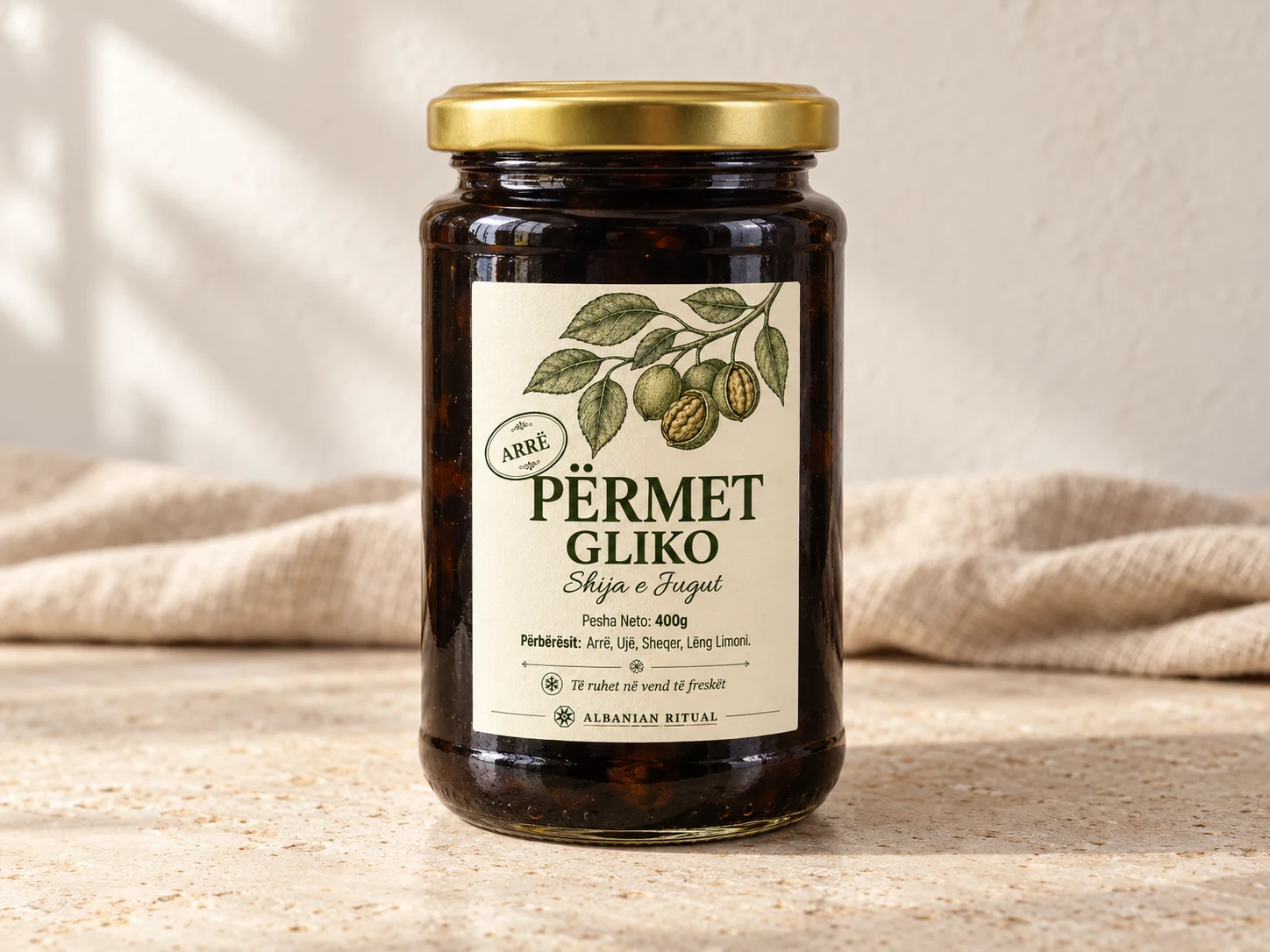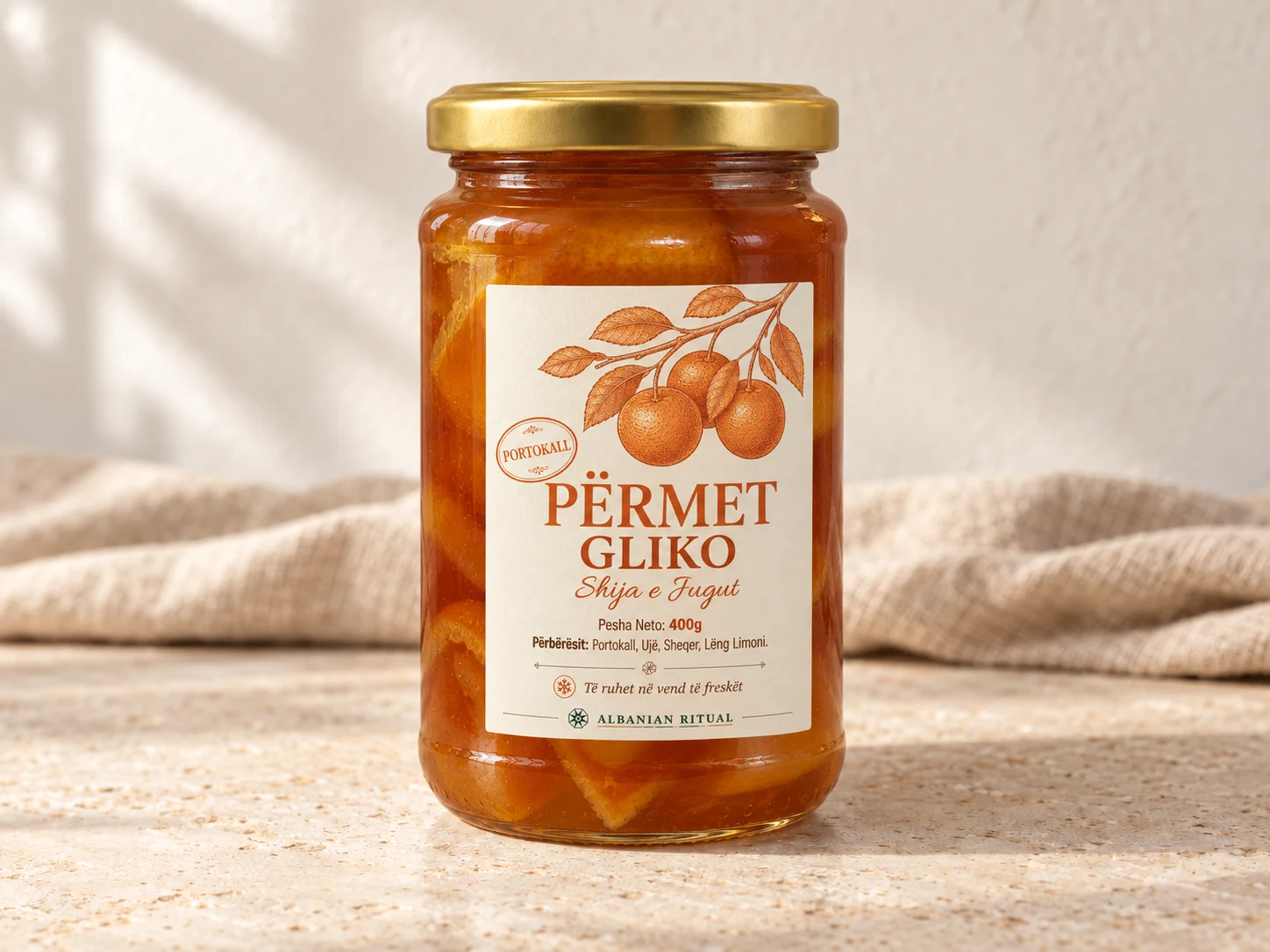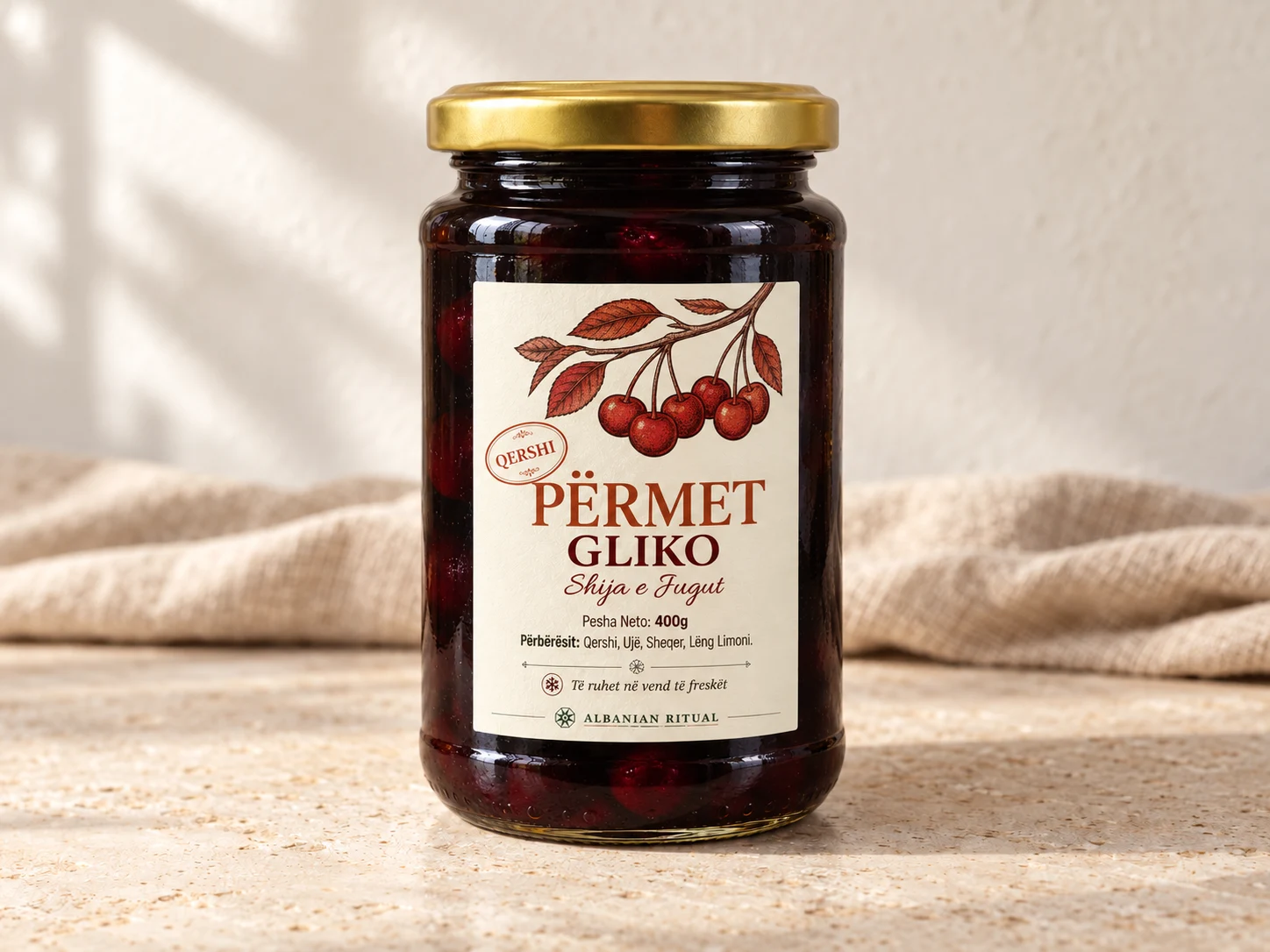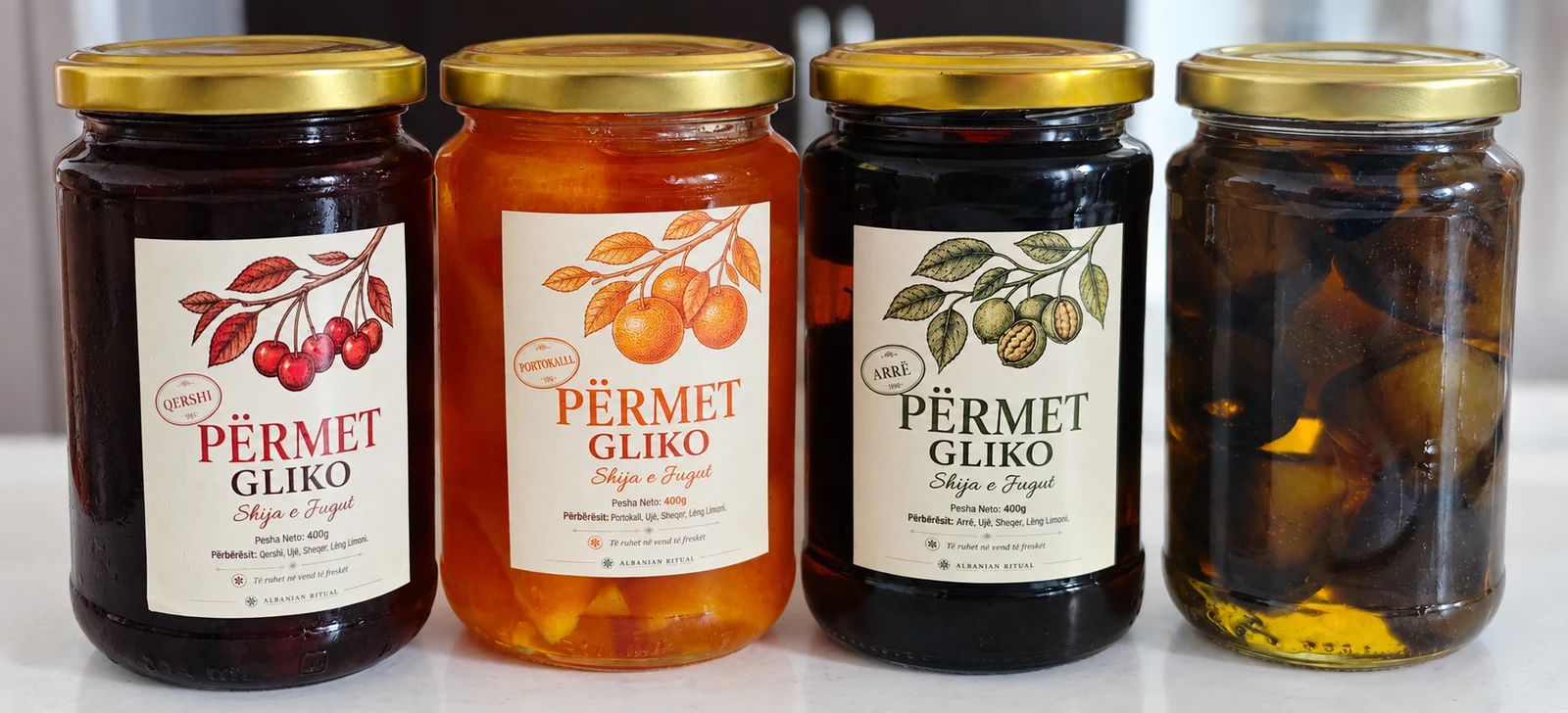
Short answer. Gliko is a spoon sweet made by preserving recognisable pieces of fruit, nuts, or other produce in syrup. In Albania, especially in places associated with the craft such as Përmet, a host may offer a guest one piece or a small spoonful on a plate, usually with a glass of cold water and sometimes coffee. It is eaten in a small portion rather than spread like jam, although recipes and serving customs vary by household and region.
Gliko is a preserve, but it is not simply jam
The clearest way to understand gliko is to look at its shape. Jam is normally cooked until fruit breaks down into something spreadable. Gliko usually keeps the chosen ingredient recognisable: a piece of orange peel, a sour cherry, or a green walnut may remain whole or nearly whole inside a clear syrup. The result is served with a spoon or on a small plate, not normally spread thickly on bread.
The word belongs to a wider Balkan and eastern Mediterranean family of spoon sweets. Albanian gliko has local expressions rather than one fixed national recipe. Fruit, ripeness, syrup concentration, aromatics, and preparation method can change from one producer or household to another. Përmet in southern Albania is particularly associated with gliko, but the tradition is not limited to one town.
How gliko is traditionally served
Gliko is closely connected with hospitality. A typical serving is deliberately small: one whole piece, or a spoonful if the fruit is small, placed on a little dish. A glass of cold water is the most consistent companion. Coffee may follow or sit beside it. The point is not a large dessert course; it is a measured welcome that gives a guest something made and kept with care.
There is no need to recreate a formal ceremony at home. Use a clean teaspoon or small fork, give each person a plate, and keep water on the table. Green walnut has a deep, gently tannic character; orange peel brings a bright, fragrant citrus aroma; sour cherry balances syrupy sweetness with acidity. These are tasting descriptions, not rules. Temperature and recipe affect every jar.
- Serve one piece or a small spoonful per person.
- Place cold water beside it; coffee is optional.
- Use a clean utensil so the remaining preserve stays in good condition.
- Treat gliko as a small welcome or finish, not as an unlimited bowl of sweets.
How to choose a jar
Start with the ingredient. Green walnut suits someone curious about the most distinctive textures; orange is a bright, familiar citrus choice; sour cherry works well for a person who prefers brightness against sweetness. Then read the label. It should identify the ingredient, net weight, producer or responsible food business, origin where provided, storage instructions, best-before information, and any allergens required for the market in which it is sold.
A place name is useful only when it is specific and truthful. If a seller claims a particular town, kitchen, or harvest, look for enough information to understand what that claim means. Photographs, batch details, and a named producer are stronger evidence than rustic language alone. Green walnut is a tree-nut product and must be treated as an allergen concern; people with allergies should rely on the product label and the producer, not a general article.
Storage and serving after opening
Storage life depends on the recipe, sugar concentration, processing method, seal, and local food rules. Follow the jar label first. Keep an unopened jar as directed, away from excess heat and direct light. After opening, refrigeration is a cautious default when the label calls for it. Always use a clean utensil, close the lid promptly, and discard the product if the seal was compromised or if you notice mould, fermentation, an unexpected odour, or other spoilage.
Gliko also has uses beyond the welcome plate. A small piece can accompany plain yoghurt, a mild cheese, or unsweetened coffee, provided the pairing does not hide its texture. Begin with the traditional small serving. Once you notice how the fruit and syrup change the next sip of water or coffee, you can decide how you want the rest of the jar to enter your own table.