
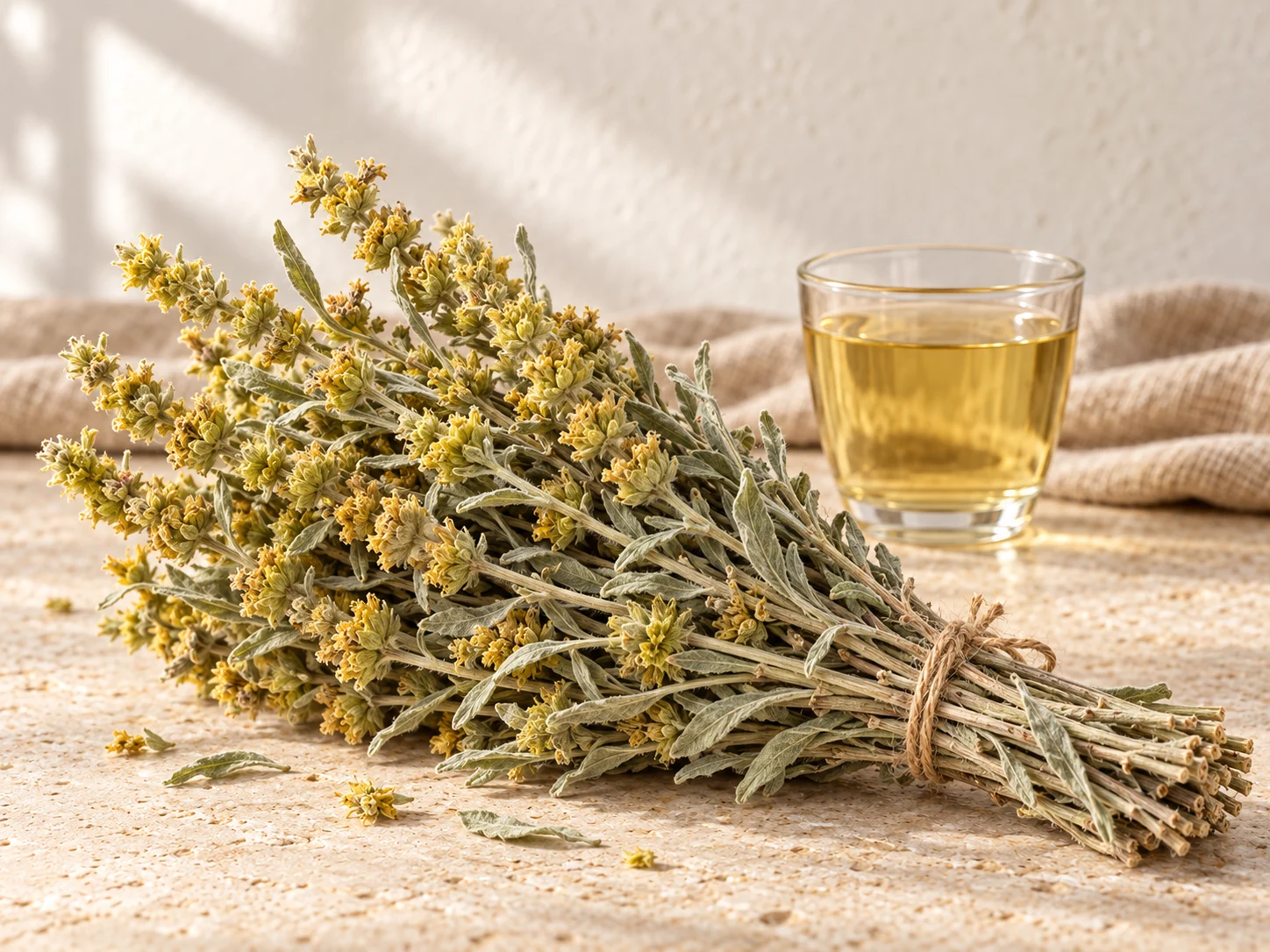
Albanian mountain tea, or çaj mali, commonly refers to dried flowering stems from plants in the Sideritis genus. Whole stems are usually simmered for a few minutes in water. Pure Sideritis is naturally caffeine-free; botanical identity and preparation instructions should still be checked on each pack.
What it is
The plant grows on dry, high ground across parts of the Balkans. Çaj mali means “mountain tea.” We keep the flower, leaf and stem together for the pot.
Wightman et al. (Nutrients, 2018) assessed cognition in 140 adults aged 50–70 over 28 days. A daily 950 mg Sideritis scardica extract improved attention accuracy and reduced state anxiety against placebo. Both tested doses, 475 and 950 mg, increased cerebral blood-flow measures on day 1, but not day 28. The study used a standardised extract; a brewed cup is a different preparation. The science of Sideritis
What the cup is like
A measured pot is usually pale gold rather than dark brown. The aroma is soft, dry, and faintly resinous; some batches seem honeyed before honey is added. Stem size, species, harvest, drying, water, and simmer time all change the result. Colour alone does not prove quality.
Why the stems stay whole
Whole stems let you see the plant and adjust the pot one stem at a time. They also ask you to slow down just enough: cold water, a gentle simmer, a first sip. As the scent reaches the room, the ritual has already begun.