
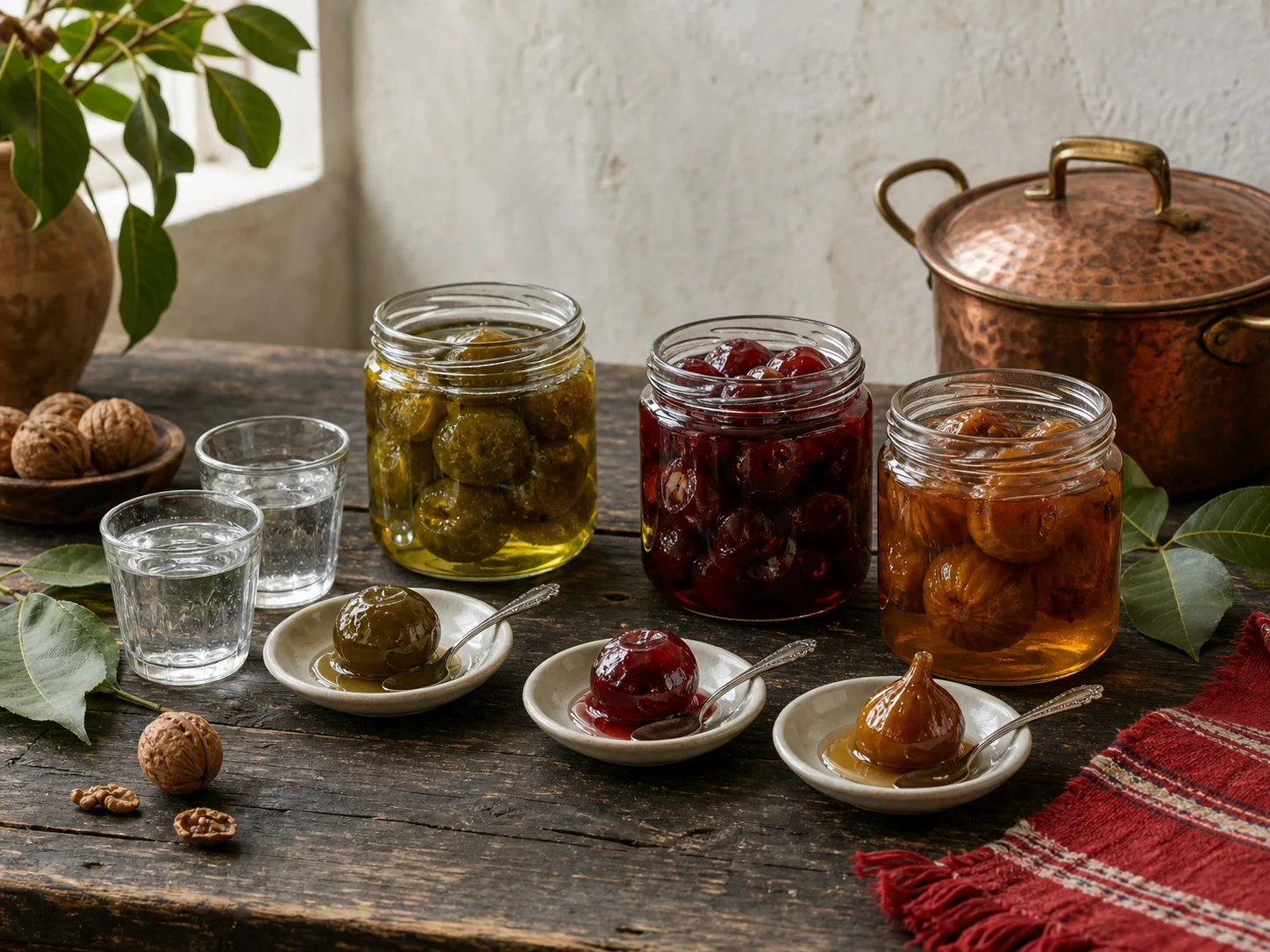
Short answer. Copper possesses exceptionally high thermal conductivity (approximately 385–400 W/m·K, over twenty times greater than stainless steel). In traditional Përmet confectionery, wide flat-bottomed tinned copper basins distribute heat instantly across the entire liquid surface, preventing localized sugar scorching (hotspots) and allowing rapid moisture evaporation to achieve clean, crystal-clear 68° Brix syrup without industrial pectin.
Thermal Diffusivity and Hotspot Elimination
When cooking delicate whole-fruit preserves like green walnuts or citrus peels, temperature spikes above 105°C cause sucrose caramelization and maillard degradation, clouding the syrup and imparting bitter burnt notes.
Copper's rapid thermal response allows confections to maintain an exact, uniform gentle simmer across the whole pan floor, responding instantaneously when the flame is adjusted.
Evaporation Kinetics in Wide-Rimmed Basins
Traditional Albanian copper pans feature wide, shallow walls that maximize the liquid-vapor surface interface. This promotes rapid moisture evaporation at lower boiling temperatures, preserving the fruit's vibrant natural pigments (anthocyanins and chlorophylls) while concentrating syrup sugars naturally.
Pure Food-Grade Tinning
To prevent acidic fruit juices from reacting with raw copper, the basins are meticulously lined with pure food-grade tin (kallaj). The result is a centuries-old artisanal technology that modern stainless steel factories cannot duplicate. Experience our Përmet Gliko Collection.
- Thermal Conductivity: Copper conducts heat at ~390 W/m·K, eliminating scorch hotspots.
- Evaporation Geometry: Wide shallow pans evaporate water swiftly at lower simmering temperatures.
- Color Preservation: Gentle uniform heat retains brilliant fruit translucency.
- Tin Lining: Pure food-grade tin barrier prevents copper oxide leaching into fruit acids.