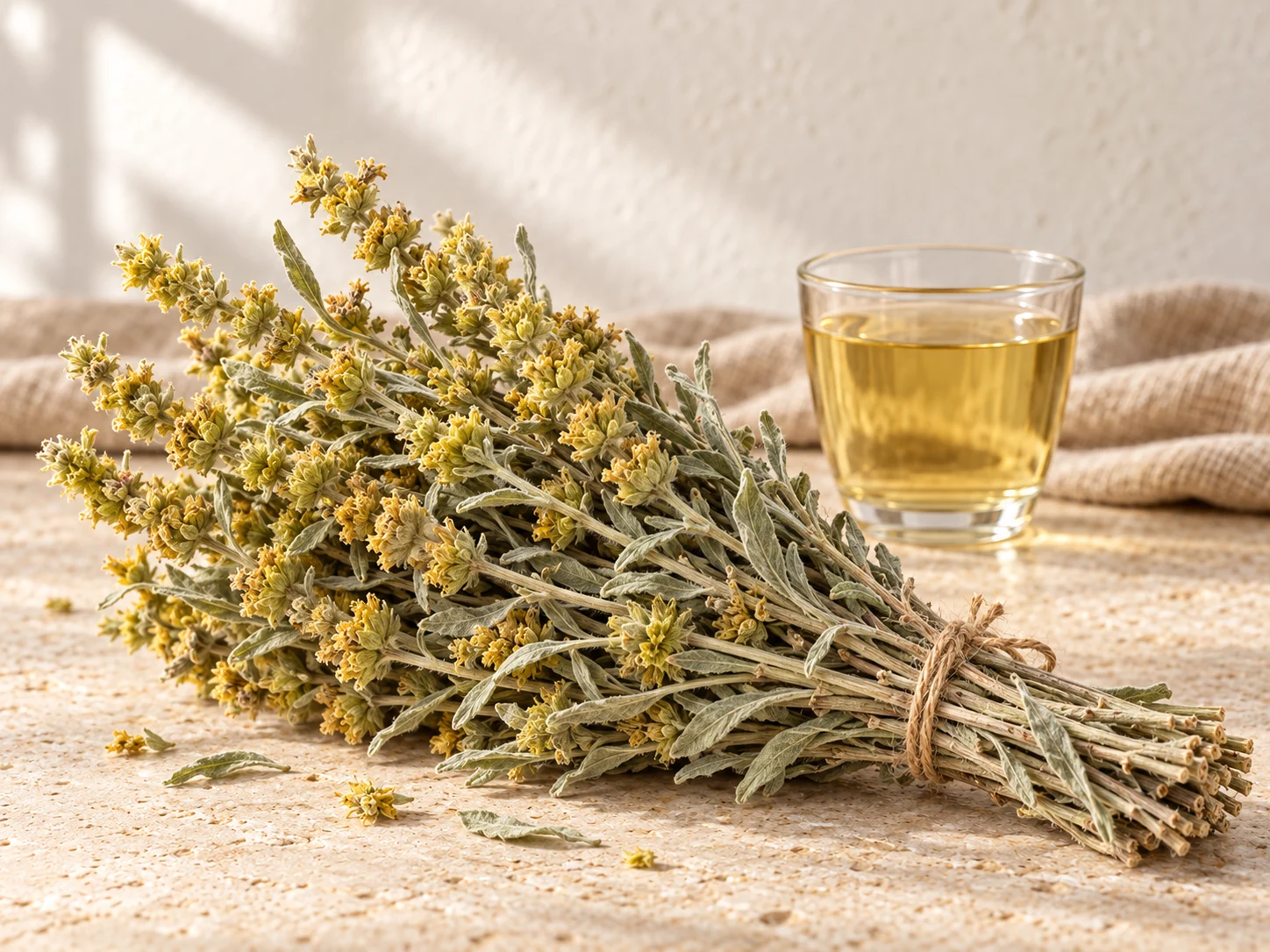
Short answer. Wild Salvia officinalis from the limestone precipices of Mount Trebeshinë and the Këlcyrë Gorge produces essential oils dominated by 1,8-cineole, camphor, alpha-thujone, and rosmarinic acid. Unlike lowland greenhouse cultivars, wild alpine sage develops compact velvety leaves dense with glandular peltate hairs that resist severe mountain winds and solar irradiation. Traditional wildcrafting cuts only upper flowering stems, leaving the woody perennial root systems intact.
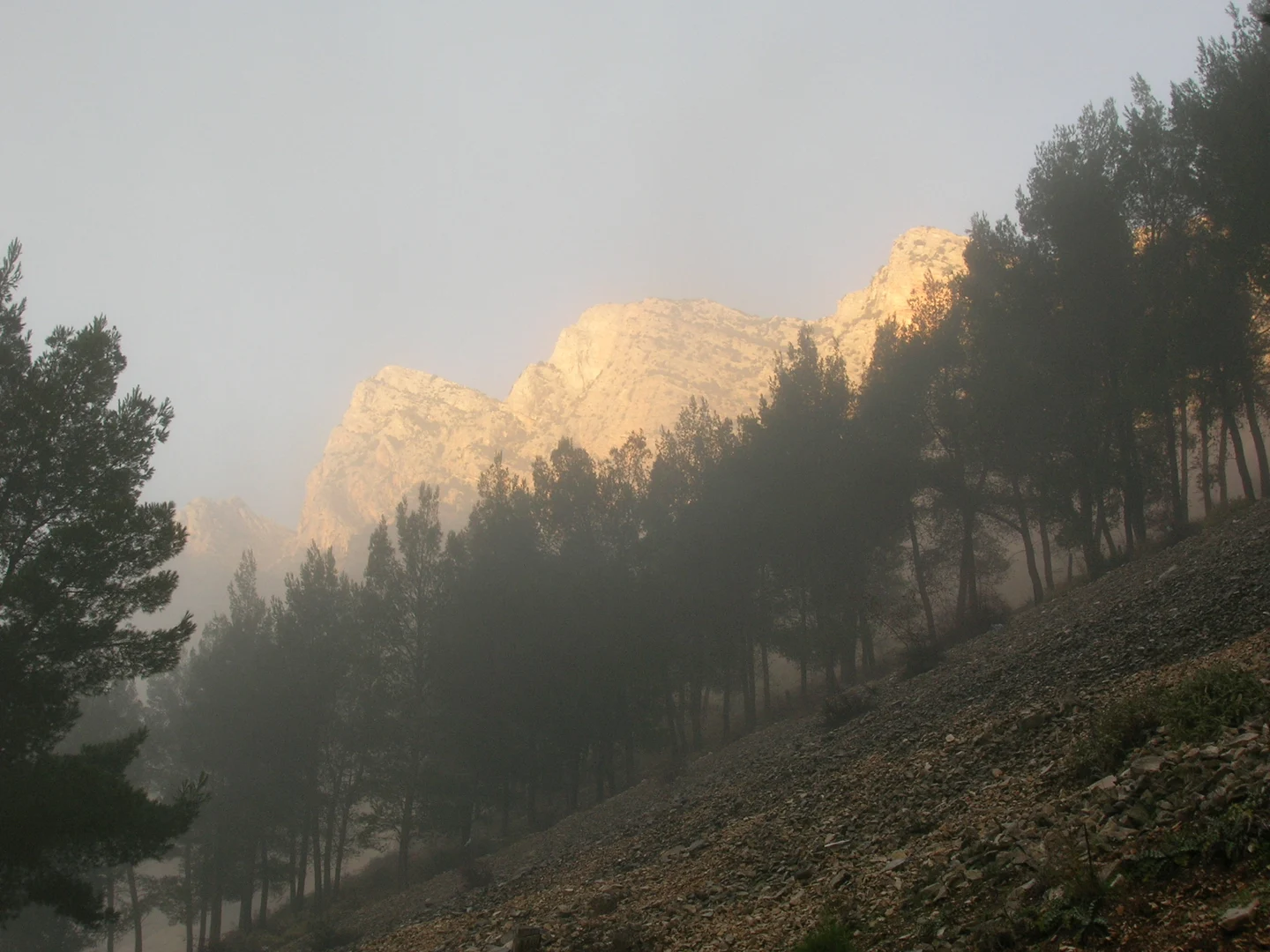
Karst Ecology of Mount Trebeshinë
Mount Trebeshinë rises directly above the Këlcyrë Gorge, presenting vertical karst cliffs and steep scree fields exposed to intense south-facing Mediterranean sunlight. In these mineral-rich, porous soils, wild Salvia officinalis forms low, aromatic cushion shrubs alongside wild thyme and winter savory.
The extreme summer drying cycles and intense alpine winds force the sage plants to produce dense peltate trichomes—microscopic glandular structures that manufacture essential oils to retard leaf transpiration and deter herbivores.
The Chemotype Profile: Cineole and Rosmarinic Acid
Gas chromatography of wild Trebeshinë sage consistently identifies a balanced chemotype rich in 1,8-cineole (eucalyptol), providing its crisp pine-camphoric aroma, complemented by camphor, borneol, and alpha-thujone. In water infusions, non-volatile caffeic acid dimers—predominantly rosmarinic acid—leach rapidly into the brew, contributing potent radical-scavenging properties.
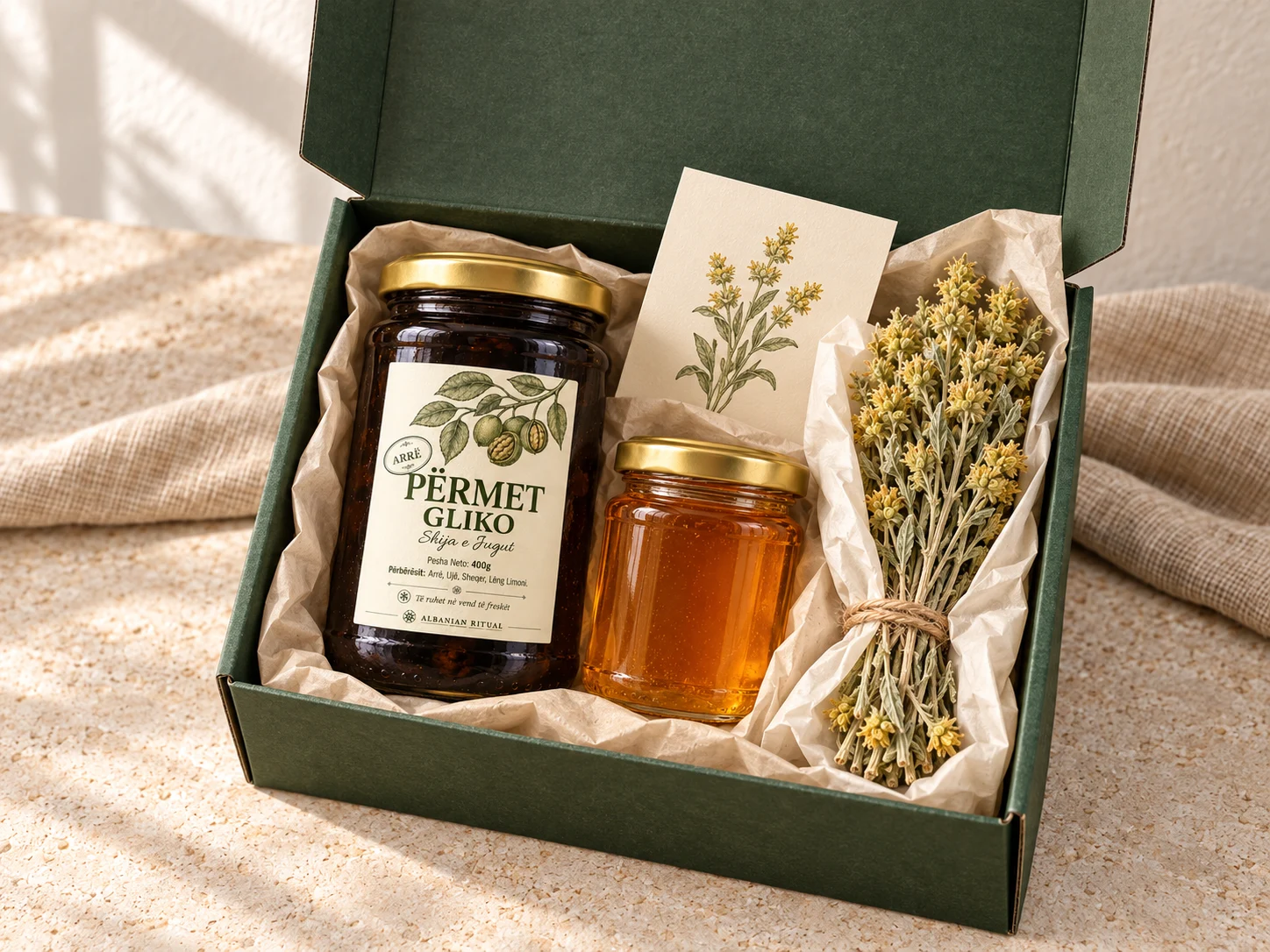
In traditional southern Albanian households, mountain sage is lightly steeped in winter infusions alongside mountain tea (*Sideritis*) and wild honey as a restorative seasonal warm drink.
Sustainable Hand Wildcrafting Standards
Preserving wild herb colonies across the Vjosa National Park corridor requires strict wildcrafting discipline. Foragers never uproot shrubs. Stems are hand-clipped above the second basal leaf node during peak flowering (late May–June), allowing the plant to set seeds and regenerate vigorously for the subsequent season.
- Botanical Identity: Wild *Salvia officinalis* native to southern Albanian karst slopes.
- Phytochemical Profile: Rich in 1,8-cineole, camphor, and antioxidant rosmarinic acid.
- Ecological Harvest: Hand-clipped stem tips above the basal nodes to preserve perennial roots.
- Traditional Use: Combined with mountain tea and wildflower honey for warming winter decoctions.