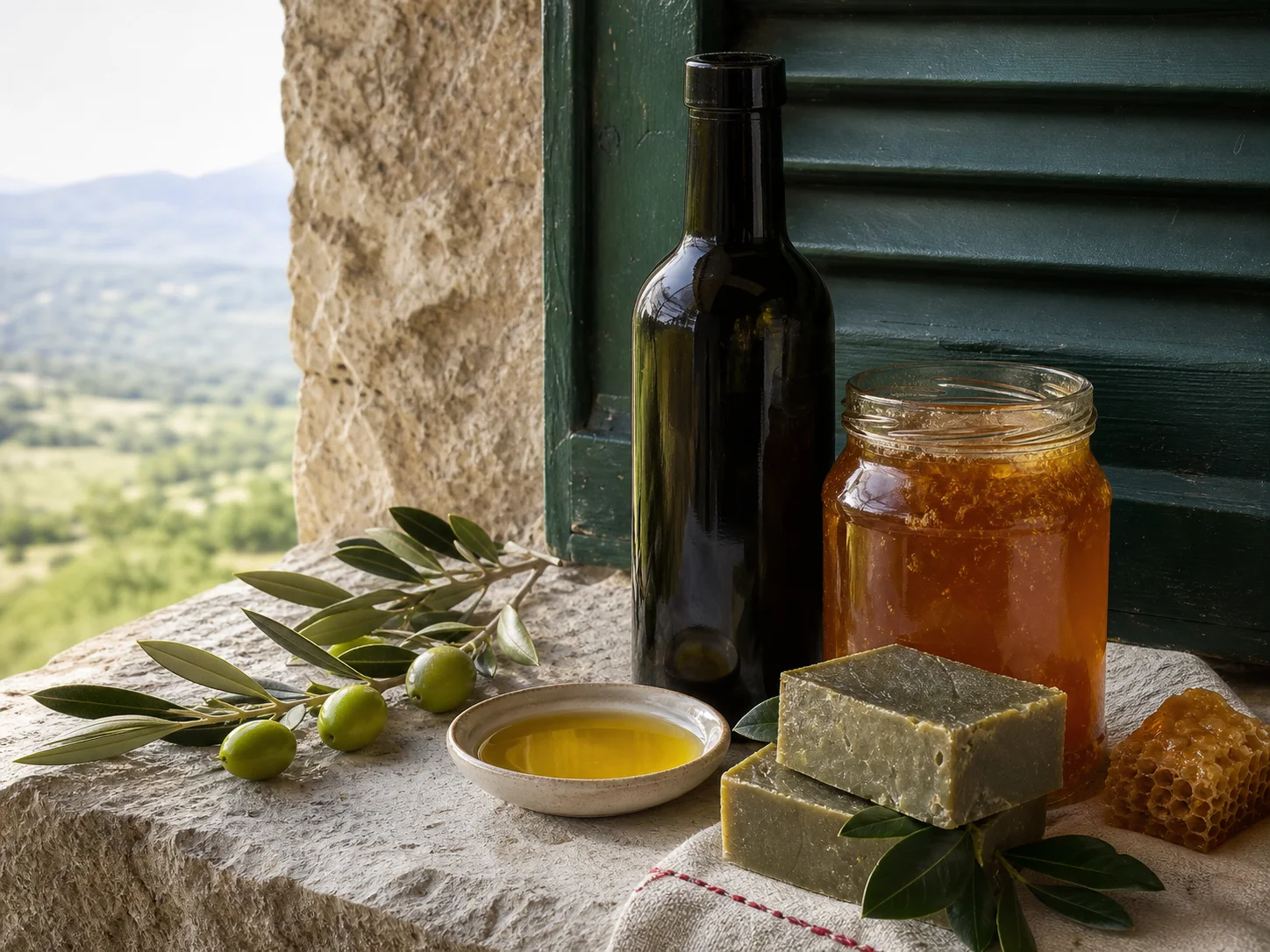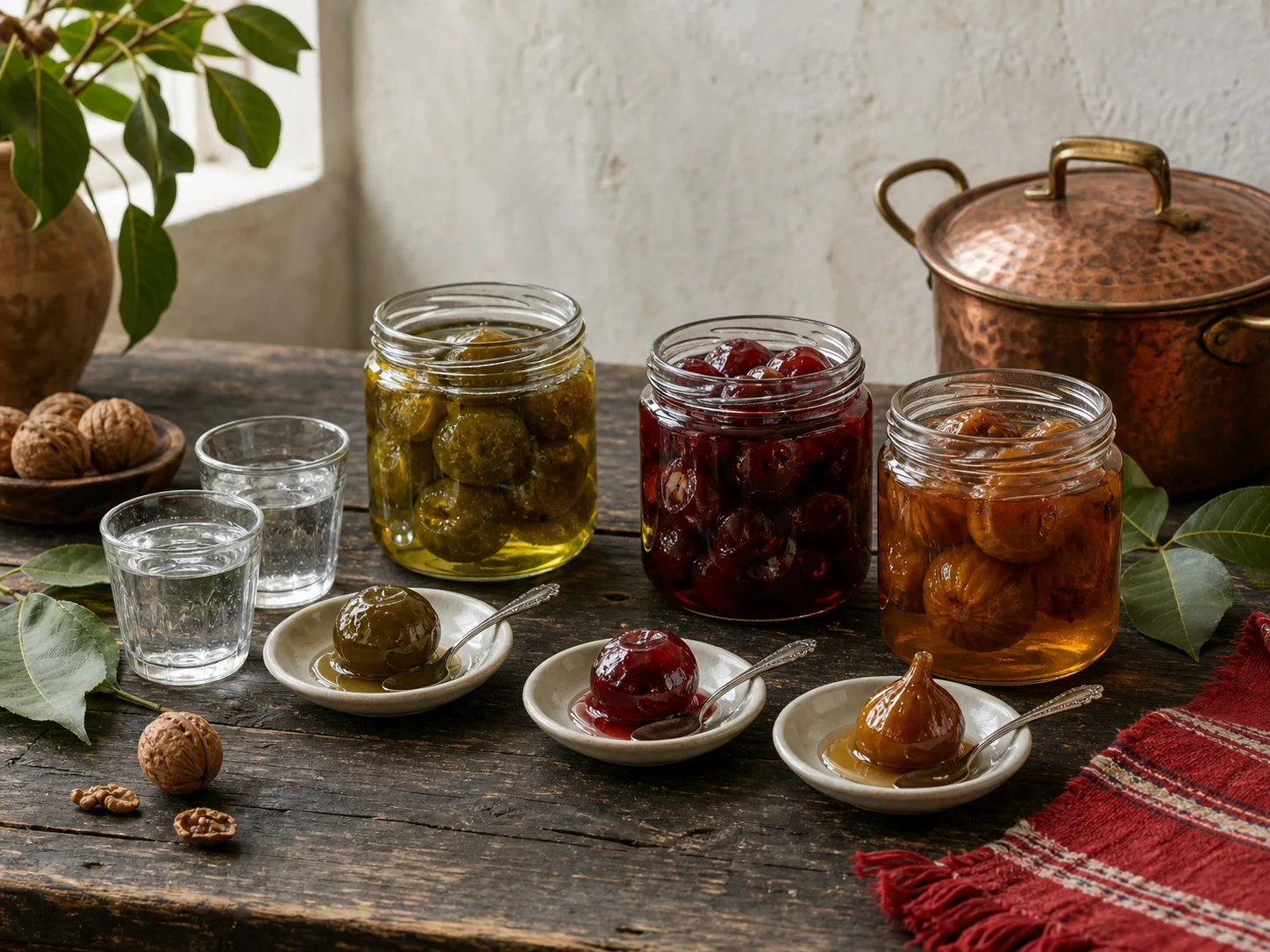
Short answer. The vernacular stone architecture of southern Albanian kulla (fortified tower houses) employs massive double-faced limestone walls exceeding 90–120 cm in thickness. This provides immense thermal inertia, stabilizing ground-level cellar chambers at a constant 12–15°C year-round. These dark, subterranean microclimates prevented photo-oxidation of virgin olive oil secoiridoids and stopped thermal degradation of whole-fruit gliko preserves.
Thermal Inertia of Karst Limestone Walls
During blistering Mediterranean summer peaks exceeding 38°C in the Vjosa canyon, kulla ground-level cellars (*qilarë*) remained naturally refrigerated without electrical power. The thick limestone envelope and earthen floors absorbed nocturnal cold air and resisted solar heat transfer.
In winter, the same masonry prevented frost from penetrating storage vaults, keeping olive oil from clouding or crystallizing.
Darkness and Photo-Oxidative Stability
Extra virgin olive oil contains natural chlorophylls that act as photosensitizers: under direct ultraviolet or visible light, chlorophyll triggers triplet-to-singlet oxygen conversion, rapidly destroying antioxidant polyphenols (hydroxytyrosol).
By storing cold-pressed oil in glazed earthenware jars (*qypa*) inside lightless stone recesses, traditional households kept oils fresh until the subsequent October harvest.
Suspended Botanical Drying Rafters
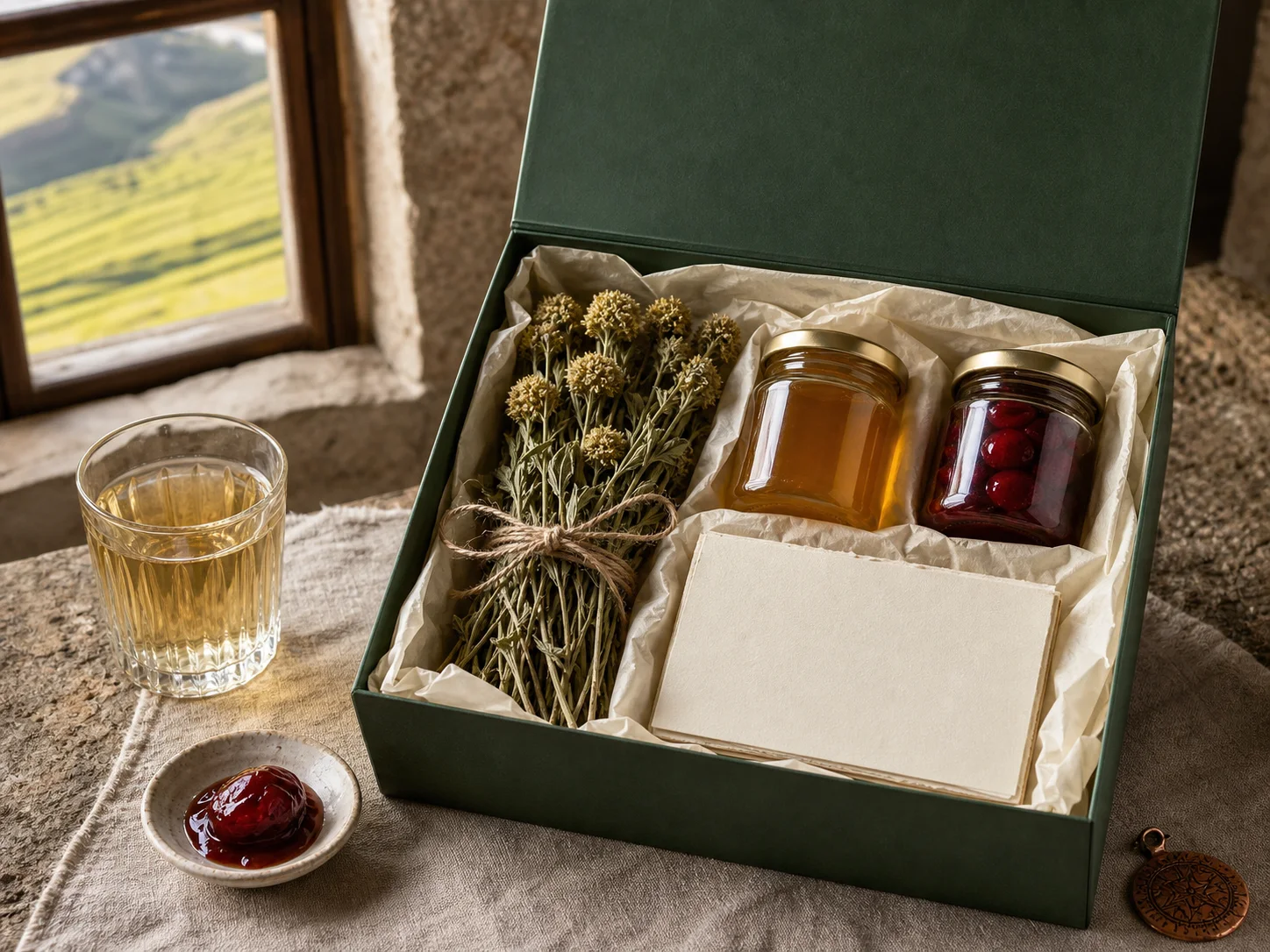
Above the cellar, dry wooden floor joists held hanging bundles of wild mountain tea (*Sideritis*) and sage. Constant gentle airflow through louvered stone arrow-slits allowed moisture evaporation while shielding flowers from direct sunlight. Discover The Hearth Box.
- Thermal Buffering: Meter-thick masonry keeps cellars stabilized at 12–15°C.
- Light Shielding: Protects olive oil secoiridoids from light-induced singlet oxygen oxidation.
- Aroma Retention: Suspended rafter storage prevents mold and preserves whole stem terpenes.
- Pantry Heritage: A sustainable architectural method for four-season provision preservation.