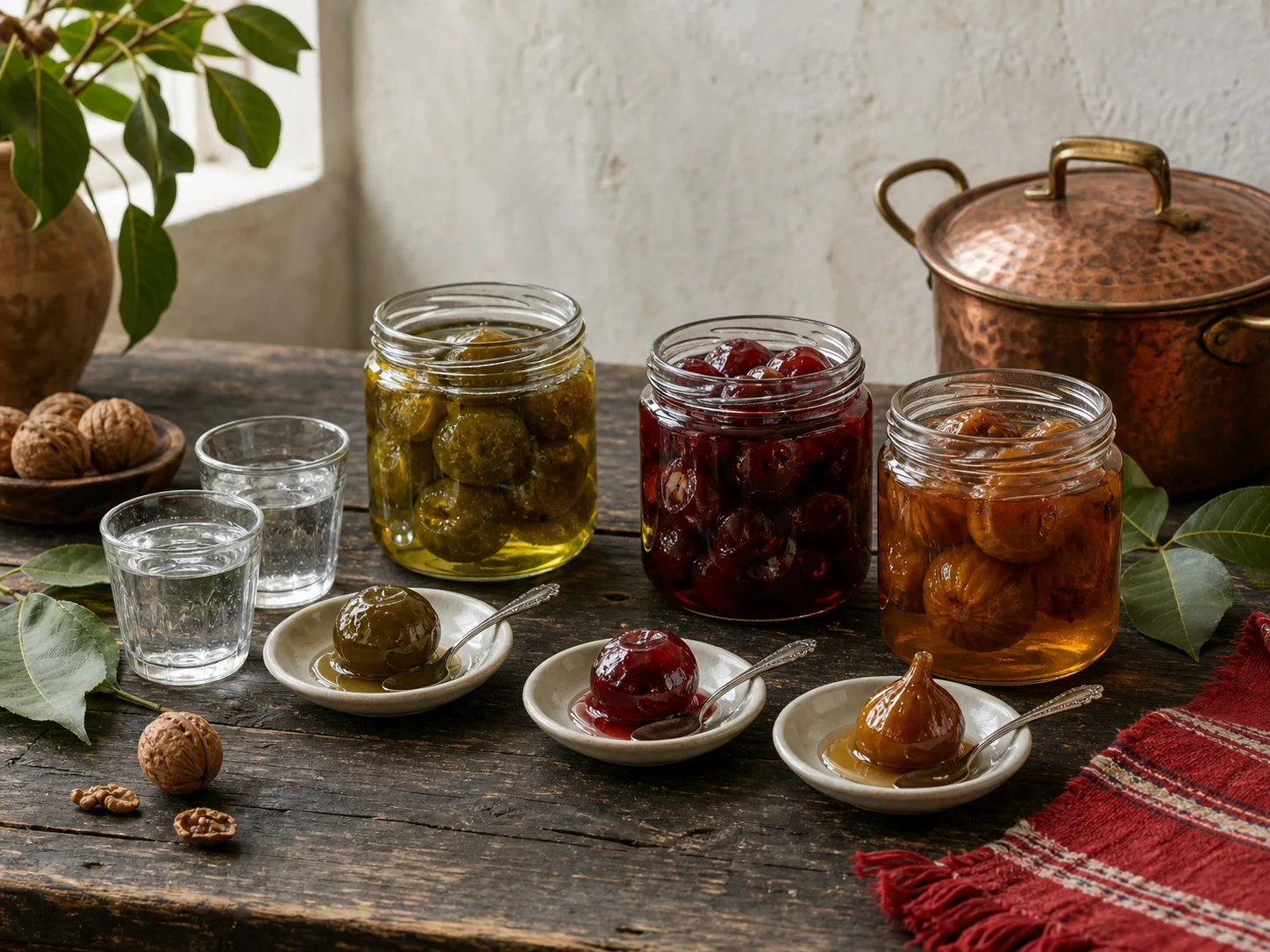
Short answer. Wild sour cherry gliko (gliko qershie e egër) relies on montane sour cherries (Prunus cerasus) possessing high natural malic acid and vivid cyanidin anthocyanin pigments. Pits are extracted manually using a thin hairpin or quill to preserve whole drupe spherical geometry. Simmering in concentrated sugar syrup with fresh lemon juice stabilizes the anthocyanin flavylium cation, resulting in a luminous ruby-red dessert.
Montane Cherry Harvest in July
Harvested in mid-summer from wild trees along the higher elevations of the Vjosa basin, these cherries are smaller and denser than commercial sweet cherries, with intense natural acidity that balances the richness of the sugar syrup.
Artisans carefully remove the central stone through the stem hollow, ensuring the skin remains intact and taut.
Anthocyanin Chemistry and Acid Fixation
Anthocyanins (primarily cyanidin-3-glucoside) are pH-sensitive pigments: in neutral or alkaline conditions, they degrade into dull brownish quinonoid bases.
By maintaining a low pH through natural fruit malic acid and freshly squeezed lemon juice, the pigments remain locked in their vibrant red flavylium cation state throughout copper-basin cooking.
Short High-Heat Simmering
Unlike thick fruit jams that boil for hours, gliko requires a short, intense simmer to set the syrup without over-cooking the delicate fruit flesh. Learn more about our Wild Sour Cherry Gliko.
- Intact Fruit: Manual stone extraction preserves whole spherical cherry shape.
- Pigment Stability: Acidic pH fixes ruby-red cyanidin anthocyanins.
- Balanced Palate: Natural malic acidity perfectly balances rich sugar syrup.
- Purity: No artificial food dyes, commercial pectin, or chemical preservatives.