Short answer. Sideritis scardica contains over 40 identified bio-compounds, dominated by phenylpropanoid glycosides (verbascoside, lavandulifolioside), flavone glycosides (apigenin, luteolin, and hypolaetin derivatives), and diterpenes. These compounds are synthesised by the plant as chemical defenses against subalpine ultraviolet radiation and arid karst soils. Pharmacological research links these specific polyphenols to radical-scavenging activity and neural vascular perfusion measured in clinical trials.
The Flavone and Phenylpropanoid Matrix
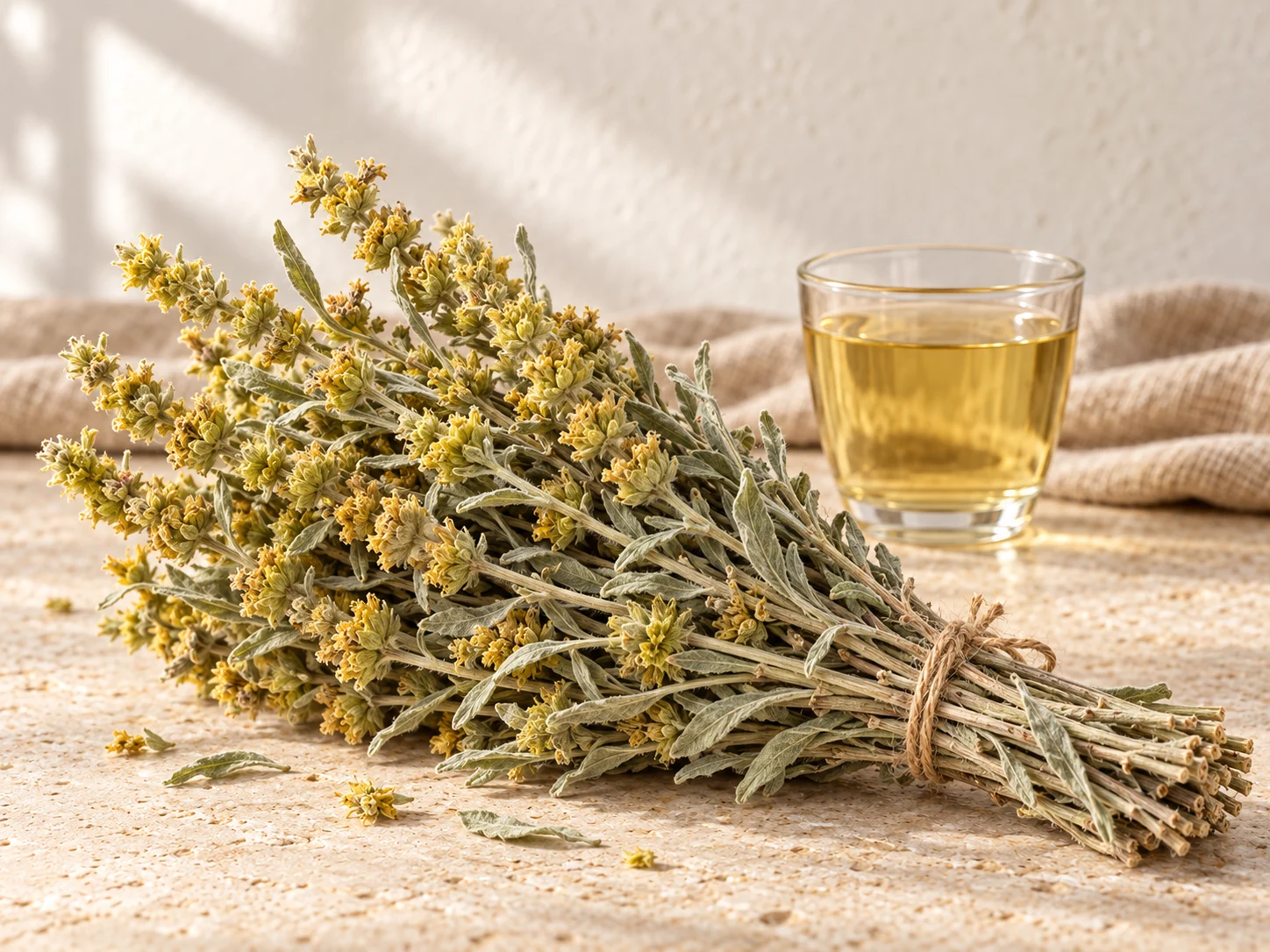
The distinct golden hue and aromatic depth of brewed Sideritis scardica arise from its dense concentration of polyphenolic glycosides. Phenylpropanoid glycosides—principally verbascoside (acteoside) and lavandulifolioside—are concentrated in the bracts and flowering whorls. Verbascoside is widely studied for its potent antioxidant kinetics, acting as a scavenger of peroxynitrite and reactive oxygen species.
Complementing the phenylpropanoids are 7-O-glycosides of apigenin, luteolin, and the rarer 8-hydroxyflavone hypolaetin. Unlike simple catechins found in Camellia sinensis, Sideritis flavones possess methylated and acetylated substituents that provide chemical stability across drying and gentle boiling.
Volatile Terpenes and Resinous Aroma
The distinct sensory aroma of mountain tea is driven by monoterpenes and sesquiterpenes located in the glandular trichomes on stems and leaves. Reviews of the species’ chemistry identify alpha-pinene, beta-pinene, limonene, and 1,8-cineole among the volatile constituents, alongside diterpenoid skeletons (Todorova M, Trendafilova A. "Sideritis scardica Griseb., an endemic species of Balkan peninsula: traditional uses, cultivation, chemical composition, biological activity." Journal of Ethnopharmacology, 2014;152(2):256–265. doi:10.1016/j.jep.2014.01.022).
Because these volatile terpenes evaporate rapidly at excessive temperatures, traditional Albanian brewing relies on starting stems in cold mountain water and simmering gently rather than pouring aggressive rolling boiling water over open infusers.
Clinical Translation: Human Trials on Sideritis Extract
Human clinical trials evaluating Sideritis utilize standardized water-ethanol extracts to establish reproducible bio-dosing. In a randomized, double-blind, placebo-controlled clinical trial (Wightman et al., Nutrients 2018;10(8):955), 140 adults aged 50–70 consumed either 475 mg or 950 mg Sideritis extract daily for 28 days. The 950 mg arm demonstrated statistically significant improvements in cognitive processing accuracy and reductions in state anxiety under mental stress.
Mechanistically, near-infrared spectroscopy in the same trial detected acute increases in prefrontal cerebral blood flow during cognitive challenges. While an artisanal pot of home-brewed tea delivers a natural polyherbal infusion rather than a measured medical dose, whole flowering stems preserve the complete phytochemical matrix without industrial degradation.
- Primary Polyphenols: Verbascoside, lavandulifolioside, apigenin and hypolaetin 7-O-glycosides.
- Aroma Terpenes: Alpha-pinene, 1,8-cineole, kaurene diterpenes in glandular trichomes.
- Human Evidence: Wightman et al. (Nutrients 2018; 140 participants) demonstrated improved attention accuracy and reduced anxiety at 950 mg/day.
- No Caffeine: Naturally 100% caffeine-free across all genuine Sideritis species.