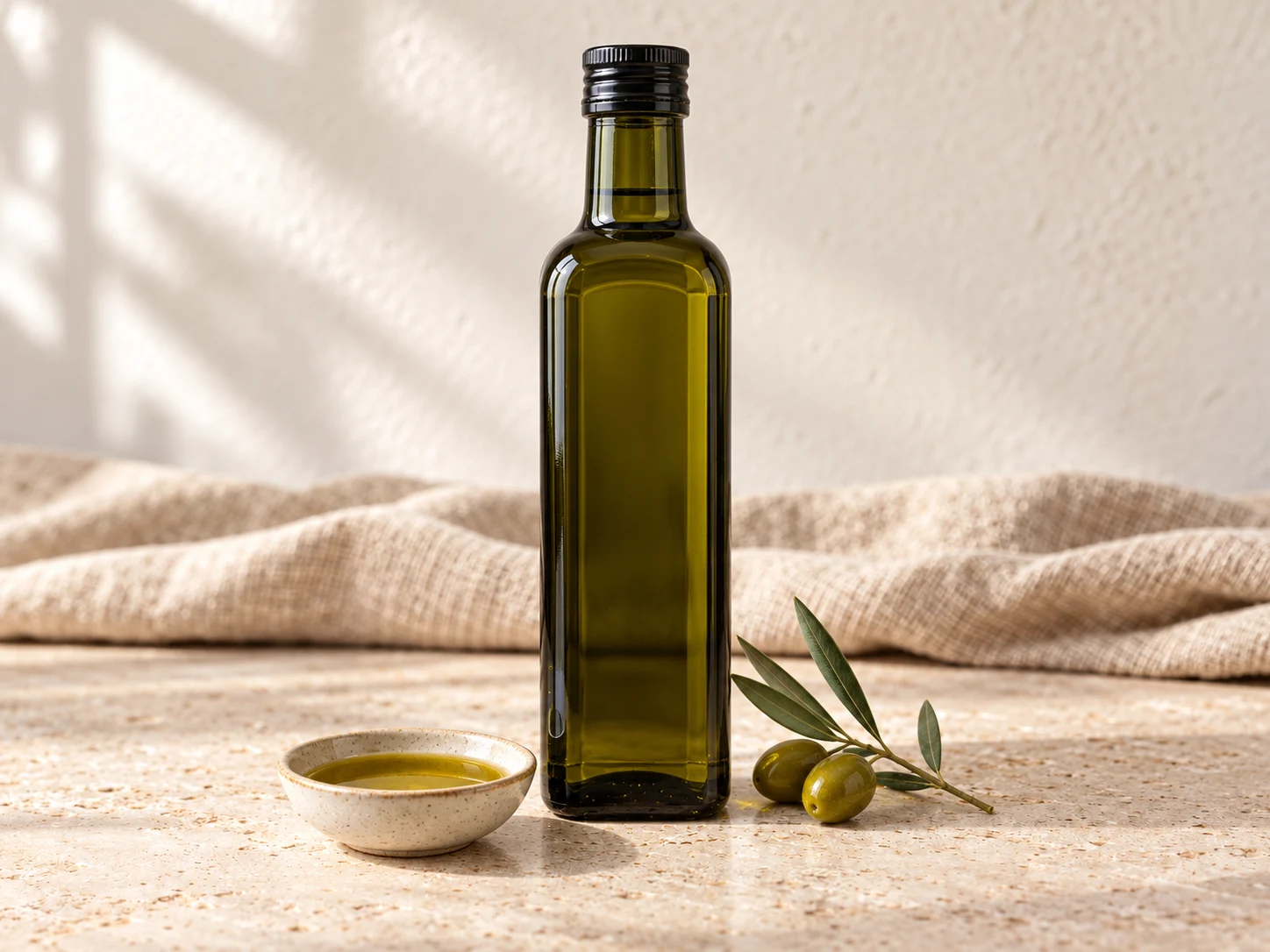
Short answer. Early-harvest extra virgin olive oil from indigenous Kalinjot groves contains dense concentrations of secoiridoids—predominantly oleuropein and ligstroside aglycones. Upon oral ingestion, these complex phenols are hydrolyzed in the gastrointestinal tract into free hydroxytyrosol and tyrosol. The 1–2 per cent minor fraction of polyphenols and tocopherols is where the antioxidant and anti-inflammatory activity attributed to extra virgin olive oil sits, according to the 2018 review by Nocella et al. The regulator-recognised wording that olive oil polyphenols protect blood lipids from oxidative stress applies only to oils containing at least 5 mg of hydroxytyrosol and derivatives per 20 g, and we will print it for our batch only once that batch has been analysed.
The Secoiridoid Matrix in Green Kalinjot Olives
In the limestone foothills of Këlcyrë and the Vjosa basin, Kalinjot olive drupes harvested in October synthesise elevated levels of oleuropein aglycone, oleocanthal, and oleacein. These polyphenols act as natural tree phytoalexins against drought and UV stress.
When milled under 27°C within 24 hours without prolonged water contact, secoiridoids remain fully esterified and protected from hydrolytic rancidity.
Human Trials, Reviews, and the Regulator Wording
The strongest cardiovascular evidence is PREDIMED (Estruch et al., NEJM 2018;378:e34, doi:10.1056/NEJMoa1800389): 7,447 people at high cardiovascular risk were randomised to a Mediterranean diet supplemented with extra virgin olive oil, the same diet with nuts, or a low-fat control diet, and major cardiovascular events were about 30 per cent lower in both Mediterranean arms. The trial tested a dietary pattern with extra virgin olive oil at its centre — not an isolated polyphenol supplement.
The regulator-recognised polyphenol claim is narrower: olive oil polyphenols contribute to the protection of blood lipids from oxidative stress, with a condition of at least 5 mg hydroxytyrosol and derivatives per 20 g of oil. That is a laboratory threshold, and we do not print it for our oil until our own batch has been analysed.
Sensory Biomarkers of Phenolic Density
Bitterness on the tongue (oleuropein derivatives) and a peppery catch in the pharynx (oleocanthal) are direct sensory evidence of phenolic density.
- Minor Fraction: Polyphenols and tocopherols are 1–2 per cent of the oil and carry most of its antioxidant activity (Nocella et al. 2018).
- Cardiovascular Evidence: PREDIMED dietary-pattern trial, doi:10.1056/NEJMoa1800389 — about 30 per cent fewer major events in the Mediterranean-diet arms.
- Extraction Gate: Cold extraction strictly under 27°C preserves heat-sensitive phenol rings.
- Regulator Wording: The polyphenol claim requires ≥5 mg hydroxytyrosol and derivatives per 20 g and is printed only for analysed batches.