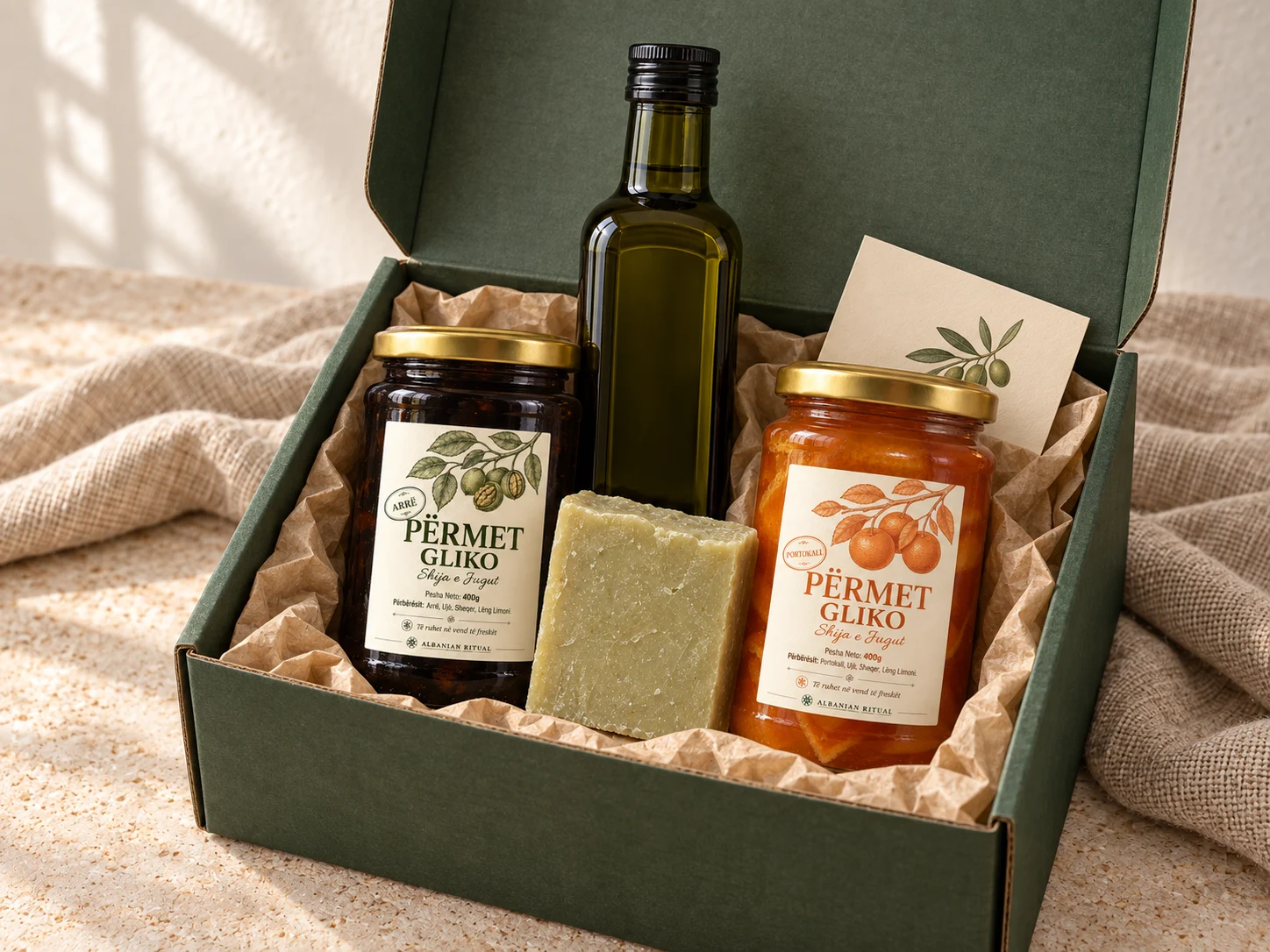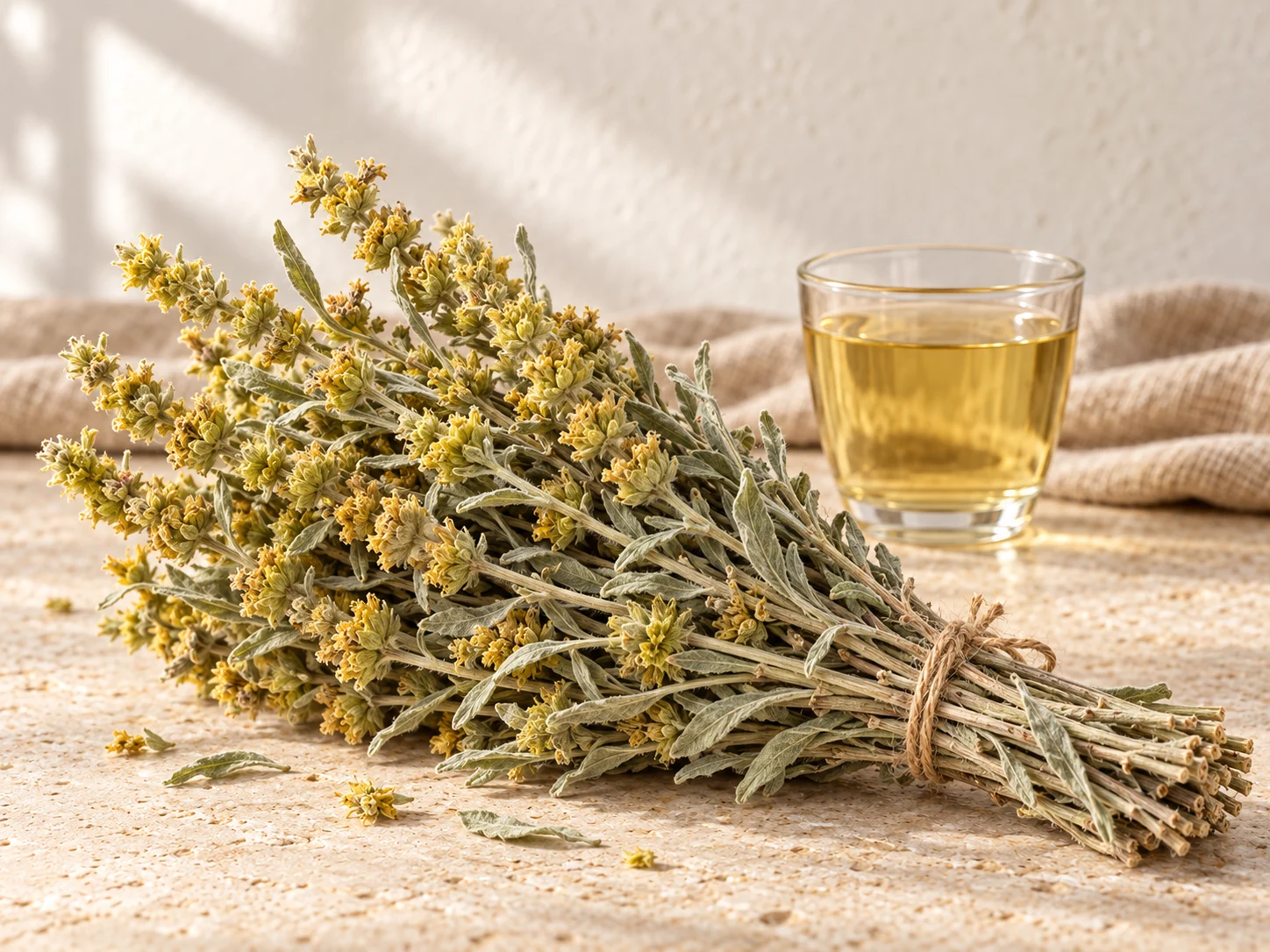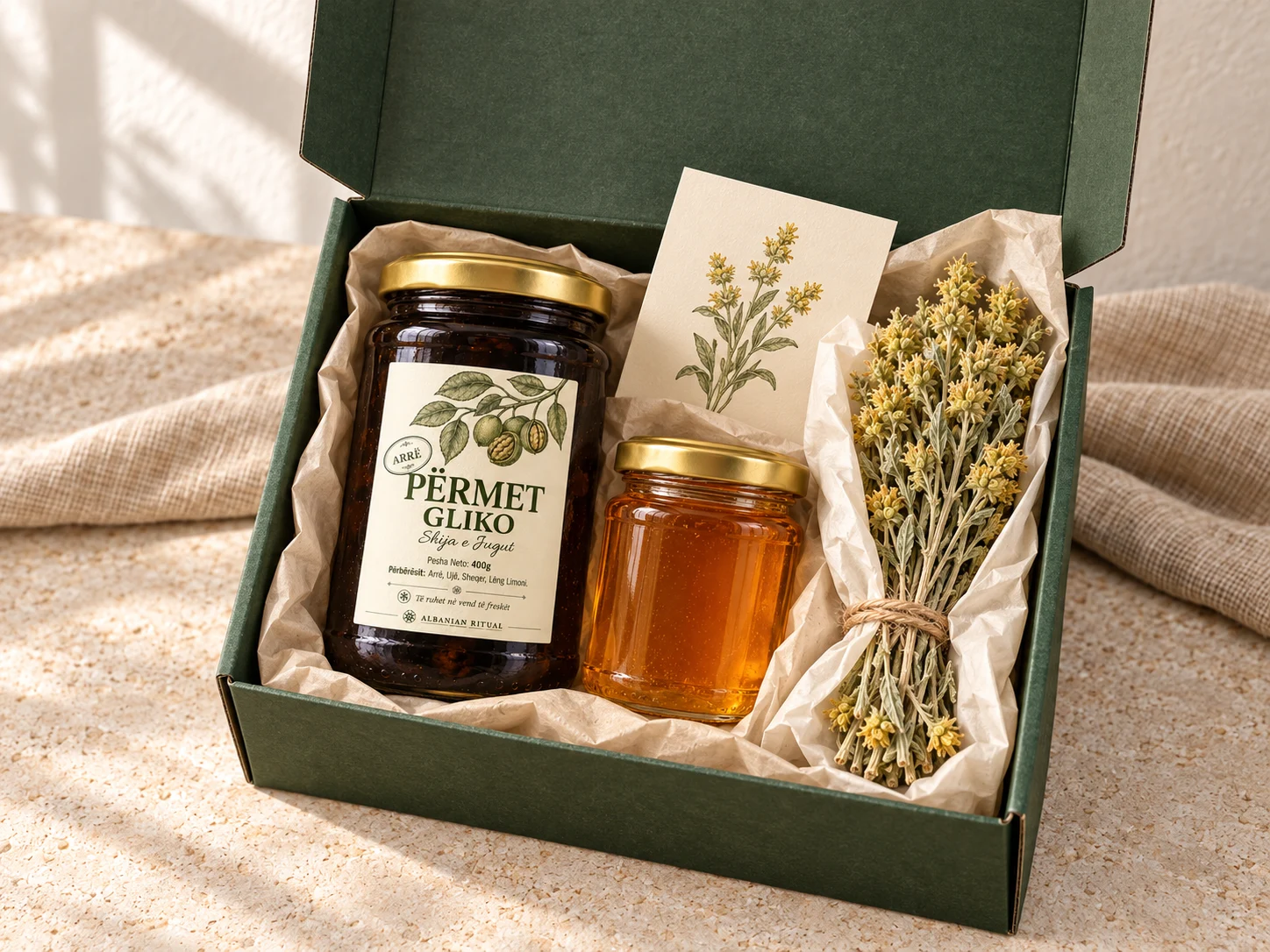
Short answer. Choose an Albanian pantry gift by starting with the person and the moment: mountain tea and honey suit a quiet evening ritual; gliko introduces the custom of welcoming a guest; olive oil belongs at the cooking table; soap adds a non-food object to a household set. Then verify exact contents, ingredients, allergens, source claims, jar and bottle sizes, delivery timing, breakage policy, and any destination restrictions before paying.
Begin with the welcome you want to send
Picture the gift’s first ten minutes in the recipient’s home. Will they put a pot on the stove, open something beside coffee, cook dinner, or keep the box for guests? That answer is more useful than the largest assortment. A focused pairing often explains Albanian hospitality better than a crowded basket.
For a tea drinker, whole-stem mountain tea with honey is a coherent starting point. Adding one gliko introduces the Albanian welcome table. For someone who cooks, olive oil and pantry preserves may be more useful. Soap broadens the gift beyond food, but check fragrance and ingredient preferences as carefully as dietary ones.
Match the contents to the recipient
Taste matters, but so does familiarity. Orange gliko is bright and aromatic, offering a familiar citrus-peel texture. Sour cherry offers acidity against the syrup. Green walnut is more unusual in flavour and texture and is a tree-nut allergen concern. Mountain tea asks for a pot and a few minutes of simmering; include clear brewing instructions so the recipient does not treat whole stems like a tea bag.
Avoid assuming that “natural,” “traditional,” or “herbal” means suitable for every person. Read every ingredient list. Check tree nuts, possible cross-contact, added flavourings, and any dietary restrictions relevant to the recipient. Honey is not suitable for children under one year. If you do not know the person’s needs, a transparent ingredient list and the option to exchange or substitute an item are more considerate than a surprise that cannot be used.
- Tea ritual: whole-stem mountain tea, optionally paired with honey.
- Guest welcome: tea, one gliko, and a serving or brewing card.
- Cooking table: olive oil with one sweet preserve for contrast.
- Household set: pantry items plus soap, with full ingredient details.
Look for provenance you can verify
“From Albania” is a beginning, not a complete source story. Stronger product information names the responsible producer or packer, the place connected to the ingredient, the harvest or batch when relevant, and where processing and packing occurred. These facts do not need romantic language. A batch number, a precise label, and a current photograph can say more than a paragraph about untouched tradition.
Be cautious with sweeping claims about ancient recipes, entire regions, or unnamed families. A credible seller separates what is documented from what is a serving suggestion or brand story — and when it states a health benefit, it names the study and links it. Ours are in the field notes: the science of mountain tea (/field-notes/science-of-mountain-tea/) and why early harvest matters for olive oil (/field-notes/science-of-single-grove-olive-oil/).
Check the practical details before you order
Confirm net weights, item count, packaging, dispatch date, estimated arrival, tracking, and what happens if glass breaks. Ask whether a gift message is included and prices are hidden. For an event, work backward from the required date and leave margin for weekends, customs, weather, and rural delivery.
Rules for sending food, honey, plant material, and other agricultural goods vary by destination and can change. The seller should state where it normally ships, but the buyer should still check current customs and import requirements for the destination, particularly outside a shared customs area. Do not infer that a product accepted in one country will enter every other country under the same conditions.
Choose a set that leaves room for the recipient
A good gift card explains each item, its supported origin, and the first simple action to take. It should not dictate a feeling. “Place two stems in cold water and simmer for three minutes” is useful; a grand promise is not. The most persuasive ritual is one the recipient can perform.
When you narrow the choice to two sets, compare the experience rather than the item count. One may open into a month of evening tea and small gliko servings; another may belong beside the stove and washstand. Choose the one that fits the person’s real home. The gift becomes distinctly Albanian through specific products, truthful origin, and a practiced form of welcome, not through decorative folklore.