Short answer. Greek and Albanian mountain tea belong to the same botanical genus (Sideritis, primarily S. raeseri and S. scardica) native to the Balkan alpine limestone. The key distinction lies in terroir and harvest method: while much Greek mountain tea is now commercially cultivated on lower-altitude agricultural fields to meet mass demand, authentic Albanian çaj mali remains predominantly wild-foraged from rocky limestone peaks above 1,200 meters in the southern mountain ranges (Nemerçka and Vjosa watershed), where severe alpine UV exposure triggers significantly higher concentrations of defensive antioxidant polyphenols and flavonoids.
Shared Balkan Botany: The Sideritis Genus
Across the Balkan peninsula, mountain tea has been gathered for millennia under various names: çaj mali in Albania, tsai tou vounou in Greece, and planinski chaj in North Macedonia. Botanically, these all refer to species of the genus Sideritis (from the Greek 'sideros', meaning iron, referring to its ancient use as a wound-healing vulnerary).
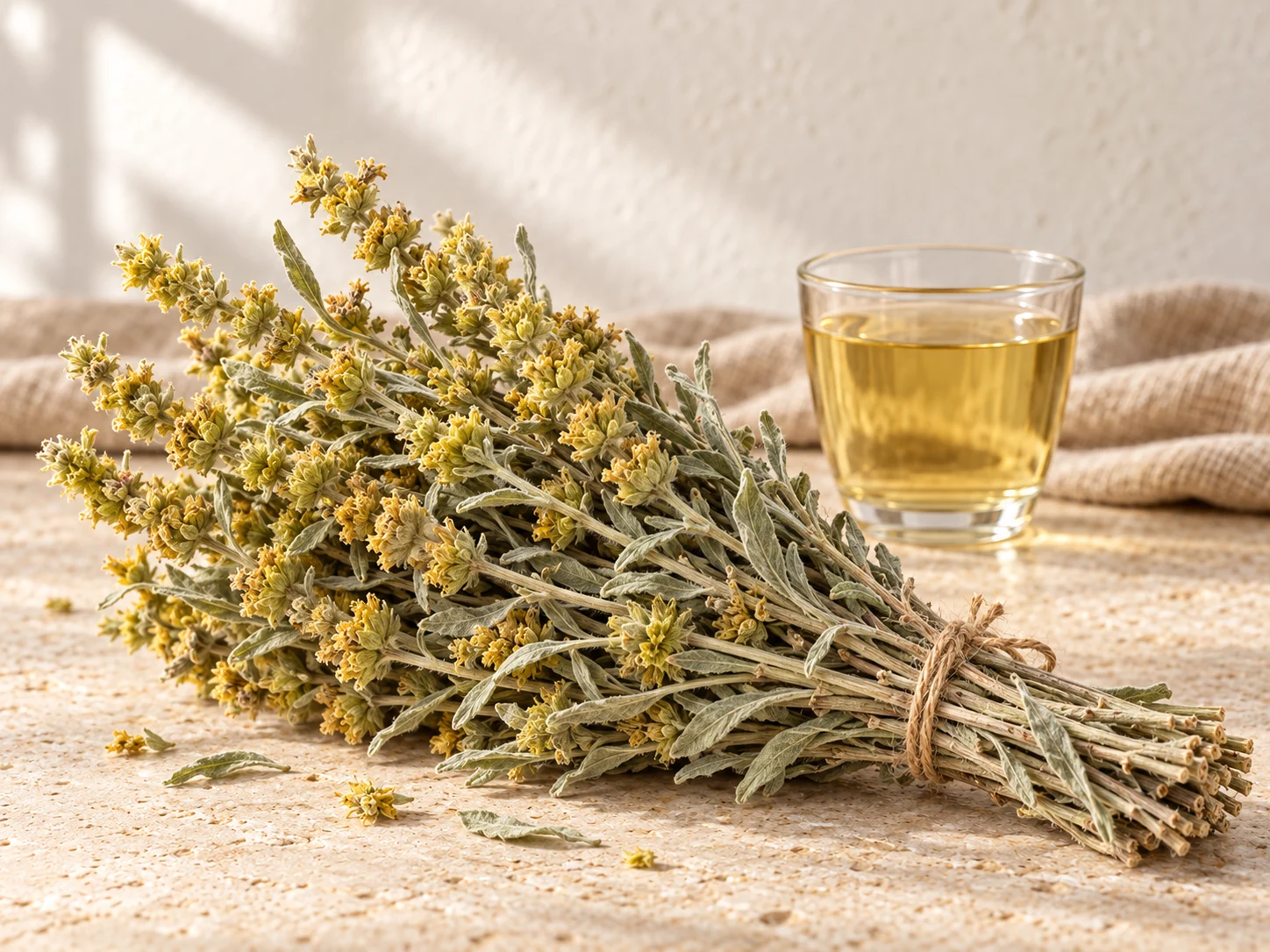
In the southern Albanian Alps and Pindus continuation, two primary species dominate: Sideritis scardica (celebrated for its broad flowering spikes and the cognitive research described in the science of mountain tea) and Sideritis raeseri (distinguished by its slender, highly aromatic yellow flowering bracts and intense lemon-herbaceous aroma).
Terroir: Wild Alpine Slopes vs. Lowland Cultivation
In recent decades, commercial demand has led to extensive lowland farming of Sideritis in Greece and other regions. While cultivated mountain tea is consistent and cheaper to harvest with machinery, agricultural irrigation and rich valley soils alter the plant's phytochemical defense profile.
Wild Sideritis thrives only in harsh conditions: thin alkaline limestone scree, zero topsoil, intense sub-zero winters, and blazing summer sun with high UV-B radiation above 1,200 meters. To survive this severe oxidative stress, wild plants synthesize dense concentrations of protective secondary metabolites—flavonoids (apigenin, luteolin), phenylethanoid glycosides (verbascoside), and diterpenes—which impart that distinctive peppery resonance and rich golden brew.
Whole-Stem Hand Harvesting vs. Machine Bagging
Industrial tea processing typically chops or pulverizes the plant into teabags, exposing delicate essential oils (monoterpenes and sesquiterpenes) to rapid oxidation and degradation.
Traditional Albanian harvesters cut only the top flowering spikes by hand with small sickles, leaving root systems intact to ensure sustainable regrowth each spring. The whole unbroken stems are shade-dried in stone-walled mountain huts, preserving the floral bracts, essential oils, and delicate golden trichomes until they are gently simmered in your kitchen.
- Botanical Identity: Identical premium Sideritis species (S. raeseri & S. scardica) sharing the same Balkan limestone alpine ecosystem.
- Phytochemical Density: Wild alpine harvesting under UV stress produces richer polyphenol and flavonoid concentrations than lowland farm cultivation.
- Whole-Stem Integrity: Authentic çaj mali is always brewed from whole intact flowering spikes, never machine-crushed teabag dust.
- Sustainable Foraging: Hand-harvested by local mountain communities preserving ancient alpine grazing ecosystems.