
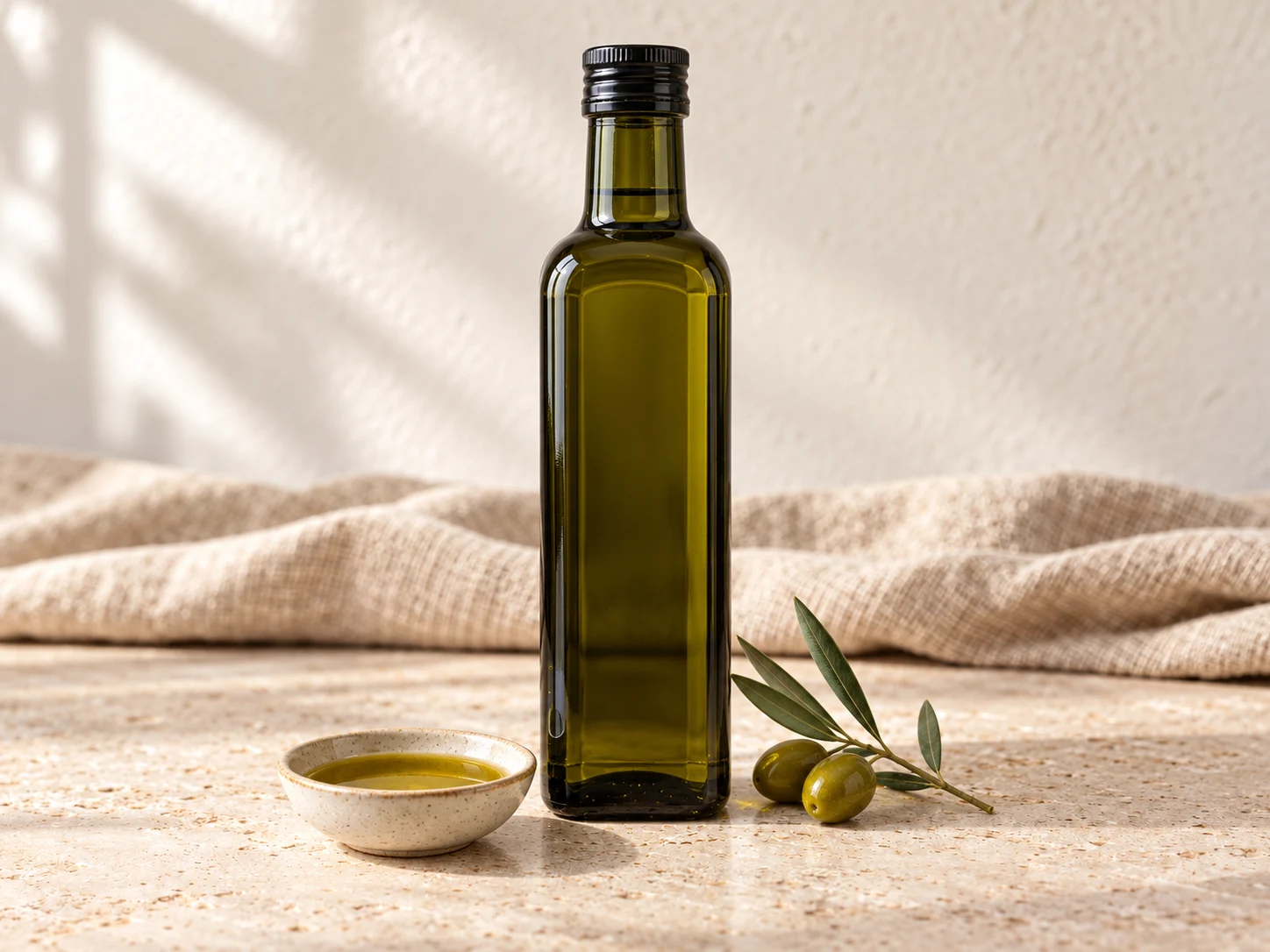
En breve. Los polifenoles, sobre todo hidroxitirosol y derivados, están en el centro de la investigación cardiovascular del virgen extra; el picor de garganta es una pista sensorial. La aceituna temprana procesada en pocas horas conserva muchos más que la tardía. La declaración reconocida sobre protección de los lípidos sanguíneos frente al estrés oxidativo exige al menos 5 mg de hidroxitirosol y derivados por 20 g. Solo la publicaremos para un lote propio después de analizarlo.
Qué respalda la investigación
Una revisión de 2018 en Endocrine, Metabolic & Immune Disorders Drug Targets examinó el virgen extra en personas sanas y con riesgo cardiovascular. Lo describe como nutriente antiinflamatorio, antioxidante y vasodilatador que puede contribuir a reducir la carga aterosclerótica. Los ácidos grasos son el 98–99% del aceite; gran parte de esa actividad está en el 1–2% restante: polifenoles, tocoferoles y otros componentes menores.
La formulación reconocida es más precisa: los polifenoles del aceite de oliva contribuyen a proteger los lípidos sanguíneos del estrés oxidativo. Está condicionada a al menos 5 mg de hidroxitirosol y sus derivados por 20 g.
El ensayo mayor estudió una dieta
PREDIMED asignó aleatoriamente a 7.447 personas de alto riesgo a dieta mediterránea con virgen extra, la misma dieta con frutos secos o una dieta de control con recomendación de reducir grasas. Los eventos cardiovasculares mayores fueron aproximadamente un 30% menores en ambos grupos mediterráneos.
Se estudió un patrón alimentario con el aceite como grasa central, no un suplemento aislado. No demuestra que una botella concreta evite un infarto.
La publicación de PREDIMED de 2013 se retiró y volvió a publicarse en 2018 tras detectarse irregularidades en la aleatorización de algunos participantes. El análisis corregido que citamos mantuvo sustancialmente las conclusiones. La retirada forma parte del historial y debe explicarse.
El momento de la cosecha
Los polifenoles son más altos en el fruto verde temprano y bajan con la maduración, la demora hasta la molienda y el calor de extracción. Cosecha temprana, extracción en frío en 24 horas y un olivar identificado son pasos que conservan esos compuestos.
Amargor y picor en la garganta proceden en gran medida de los fenoles. Un aceite suave y mantecoso puede resultar agradable, pero normalmente no es rico en polifenoles.
Lo que espera al laboratorio
No damos una cifra de polifenoles de nuestro aceite porque no hemos analizado el lote. Cuando se haga, publicaremos valor y laboratorio; si supera el umbral, usaremos la declaración reconocida. Hasta entonces hablamos de cosecha y proceso, no de miligramos.
Una versión anterior citaba dos identificadores PubMed ajenos, sobre emulsiones alimentarias y terapia por ultrasonidos. Se retiraron. La referencia siguiente conduce a la revisión indicada.
Leer las fuentes
Estruch R, Ros E, Salas-Salvadó J, et al. "Primary Prevention of Cardiovascular Disease with a Mediterranean Diet Supplemented with Extra-Virgin Olive Oil or Nuts." New England Journal of Medicine, 2018;378(25):e34. doi:10.1056/NEJMoa1800389 — análisis PREDIMED retirado y republicado, https://pubmed.ncbi.nlm.nih.gov/29897866/
Nocella C, Cammisotto V, Fianchini L, D’Amico A, Novo M, Castellani V, Stefanini L, Violi F, Carnevale R. "Extra Virgin Olive Oil and Cardiovascular Diseases: Benefits for Human Health." Endocrine, Metabolic & Immune Disorders Drug Targets, 2018. doi:10.2174/1871530317666171114121533 — https://pubmed.ncbi.nlm.nih.gov/29141571/