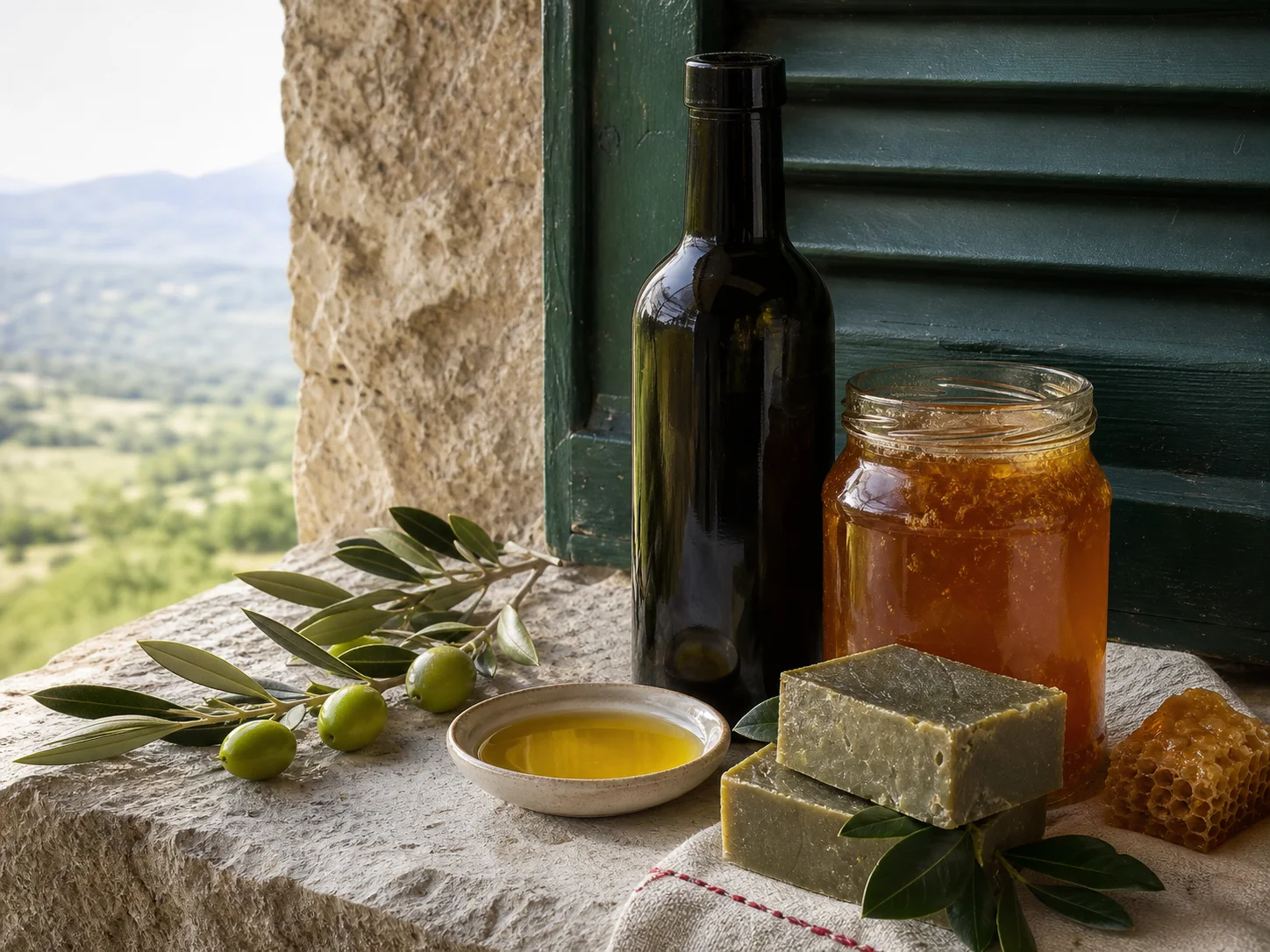
Short answer. The geological foundation of the southern Albanian mountain ranges (Trebeshinë, Nemërçkë, Dhëmbel) consists of Mesozoic and Cenozoic karst limestone. The resulting soils—rendzinas and terra rossa—exhibit alkaline pH (7.5–8.2), high exchangeable calcium (Ca2+), and low available phosphorus. This nutrient-restricted, mineral-dense soil environment forces plants like Sideritis scardica and Kalinjot olive trees to activate shikimate metabolic pathways, dramatically upregulating antioxidant polyphenol and terpene biosynthesis.
Limestone Geochemistry and Terra Rossa Soils
Centuries of rain leaching through limestone rock dissolve soluble carbonates, leaving behind a thin, iron-rich reddish clay loam known as *terra rossa*. While fertile in trace micronutrients (iron, magnesium, zinc), these rocky soils drain water almost instantly.
Plants must root deep into fissures to tap subterranean moisture veins, experiencing mild, continuous water deficit stress that limits vegetative water-weight while concentrating aromatic bio-compounds.
The Shikimate Pathway and Polyphenol Upregulation
Under high-calcium, alkaline soil conditions and intense solar radiation, plants cannot direct excess nitrogen into rapid foliage growth. Instead, carbon skeletons generated through photosynthesis are routed into the shikimate-phenylpropanoid pathway.
This biochemical process synthesizes defensive phenylpropanoids (verbascoside), flavones (apigenin, luteolin), and secoiridoids (oleuropein, oleocanthal) that accumulate in leaves, flowers, and fruit skins.
Why Lowland Commercial Agriculture Fails to Match Karst Density
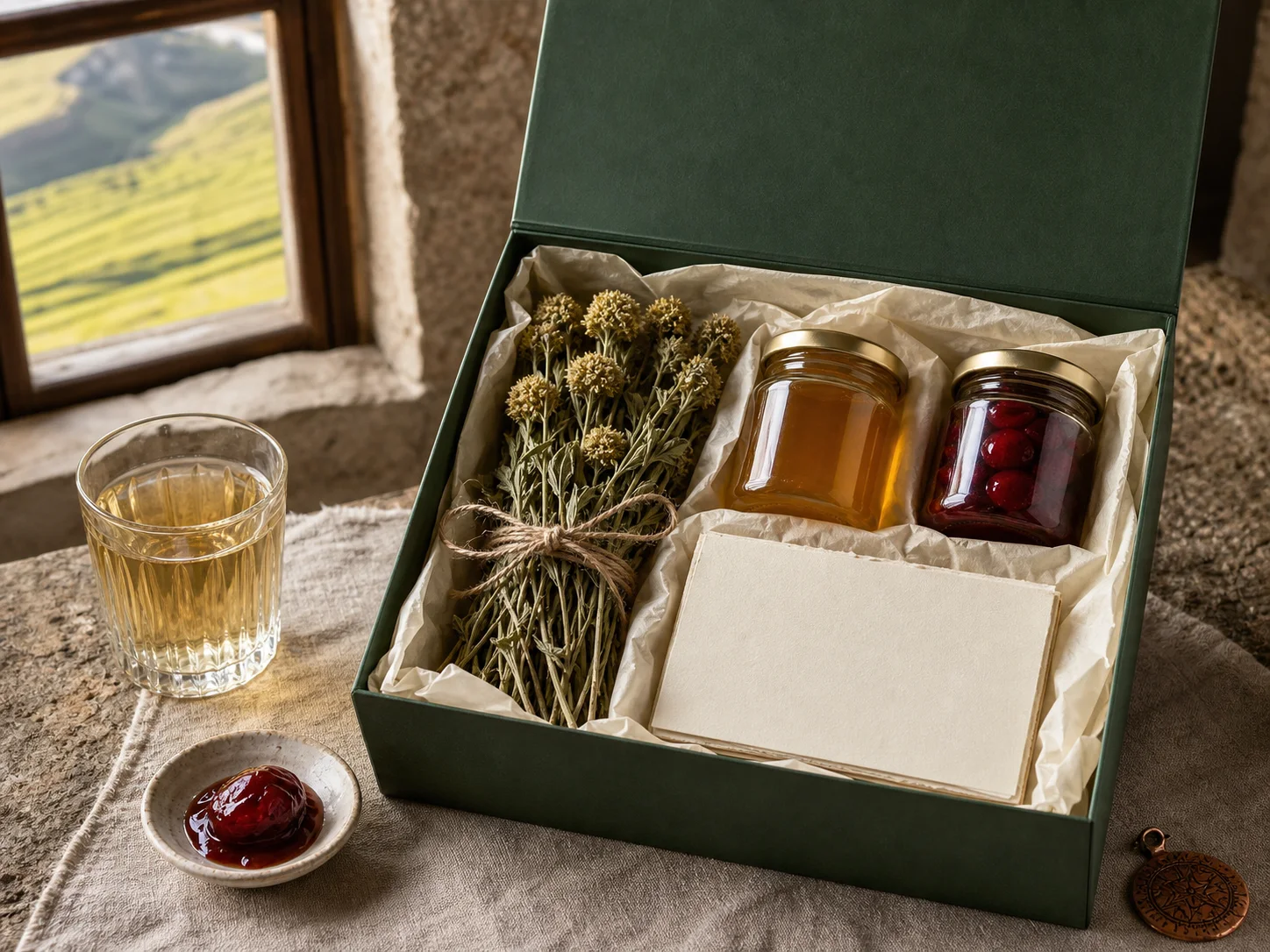
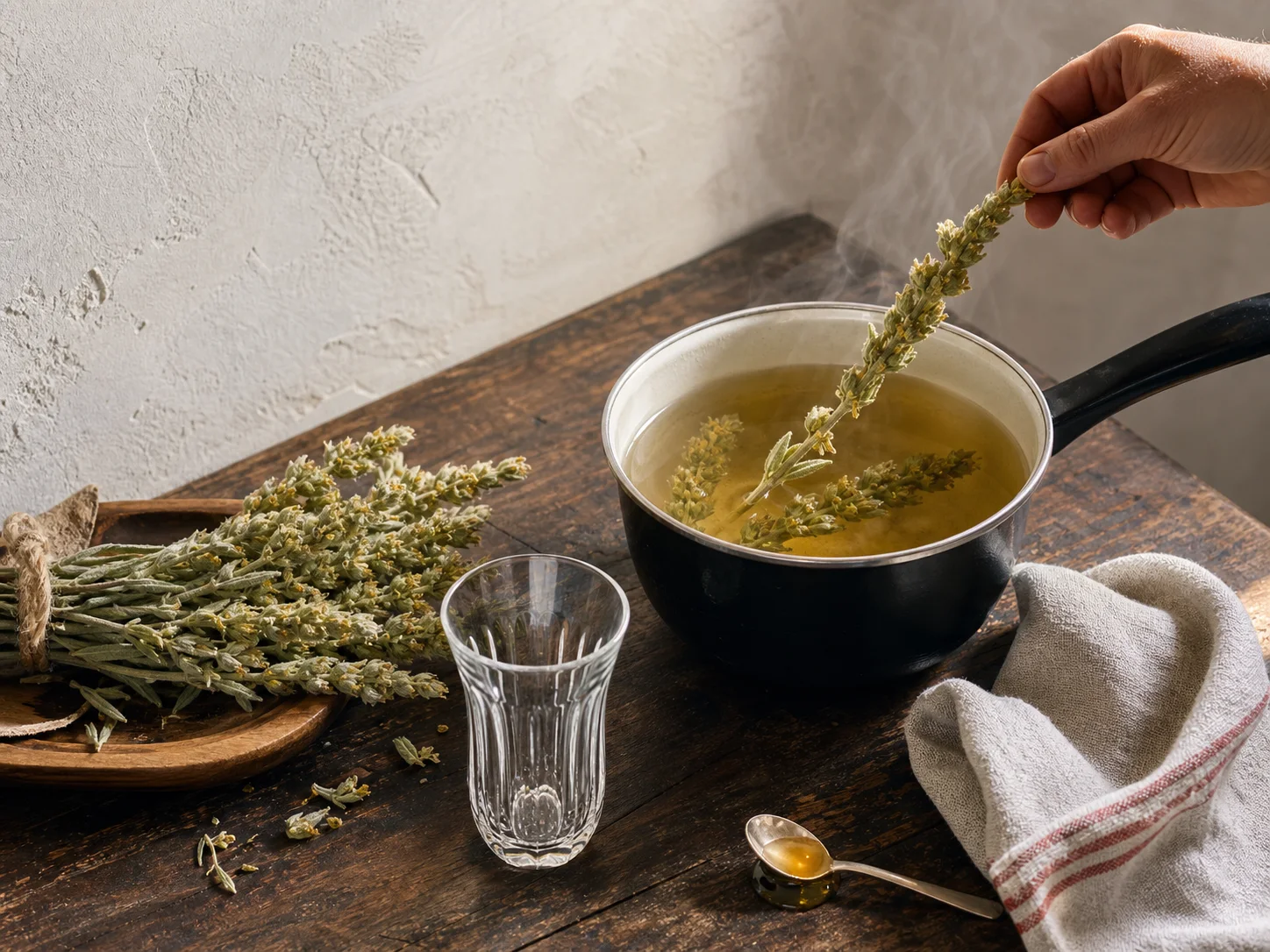
When mountain herbs are brought down into rich, irrigated alluvial soils with artificial nitrogen fertilizers, the plants grow rapidly into lush, green bushes—yet laboratory assays reveal their polyphenol and essential oil concentrations drop by 40–70%. Karst adversity is the essential catalyst for botanical potency. Explore our wild-harvested Not-for-Sale Mountain Tea.
- Soil Matrix: High-calcium limestone rendzinas and terra rossa (pH 7.5–8.2).
- Biochemical Driver: Nutrient restriction and rapid drainage stimulate the shikimate pathway.
- Metabolite Yield: Maximizes verbascoside, apigenin, oleuropein, and volatile terpene synthesis.
- Terroir Authenticity: Natural karst stress produces phytochemical density impossible to duplicate industrially.