Kurz gesagt. Kalinjot ist eine alte, einheimische Olivensorte aus den zerklüfteten Kalksteinhügeln Südwestalbaniens. Die Bäume wachsen ohne kommerzielle Bewässerung auf trockenen Bergterrassen über den ionischen und Vjosa-Becken. Anfang Oktober grün geerntete Früchte ergeben weniger Öl mit intensiver Kräuterbitterkeit und pfeffrigem Kratzen im Hals. Dieses Kratzen ist das sensorische Kennzeichen von Oleocanthal. Wir veröffentlichen keine Polyphenolwerte für unser Öl, da noch keine unserer Chargen analysiert wurde. Sobald das geschieht, nennen wir den Wert und das Labor.
Wie Terroir und Trockenresistenz die Polyphenolbildung beeinflussen
Olivenbäume synthetisieren phenolische Verbindungen wie Oleocanthal, Oleacein und Hydroxytyrosol als evolutionäre Verteidigung gegen UV-Strahlung, trockene Sommerhitze und Insektenprädation.
Da Albaniens alte Kalinjot-Haine an steilen Kalksteinhängen gepflanzt werden und wenig oder keine künstliche Bewässerung erhalten, dringen die Wurzeln tief in das Mineralgestein ein. Wenn die Frucht grün geerntet wird, bevor sie im Oktober lila-schwarz wird, liefert sie weniger Öl pro Kilogramm als vollständig gereifte Früchte - ein Kompromiss, den die frühe Ernte im Austausch für ein intensiveres, stabileres Phenolprofil akzeptiert.
Das pfeffrige Kratzen: Oleocanthal verstehen
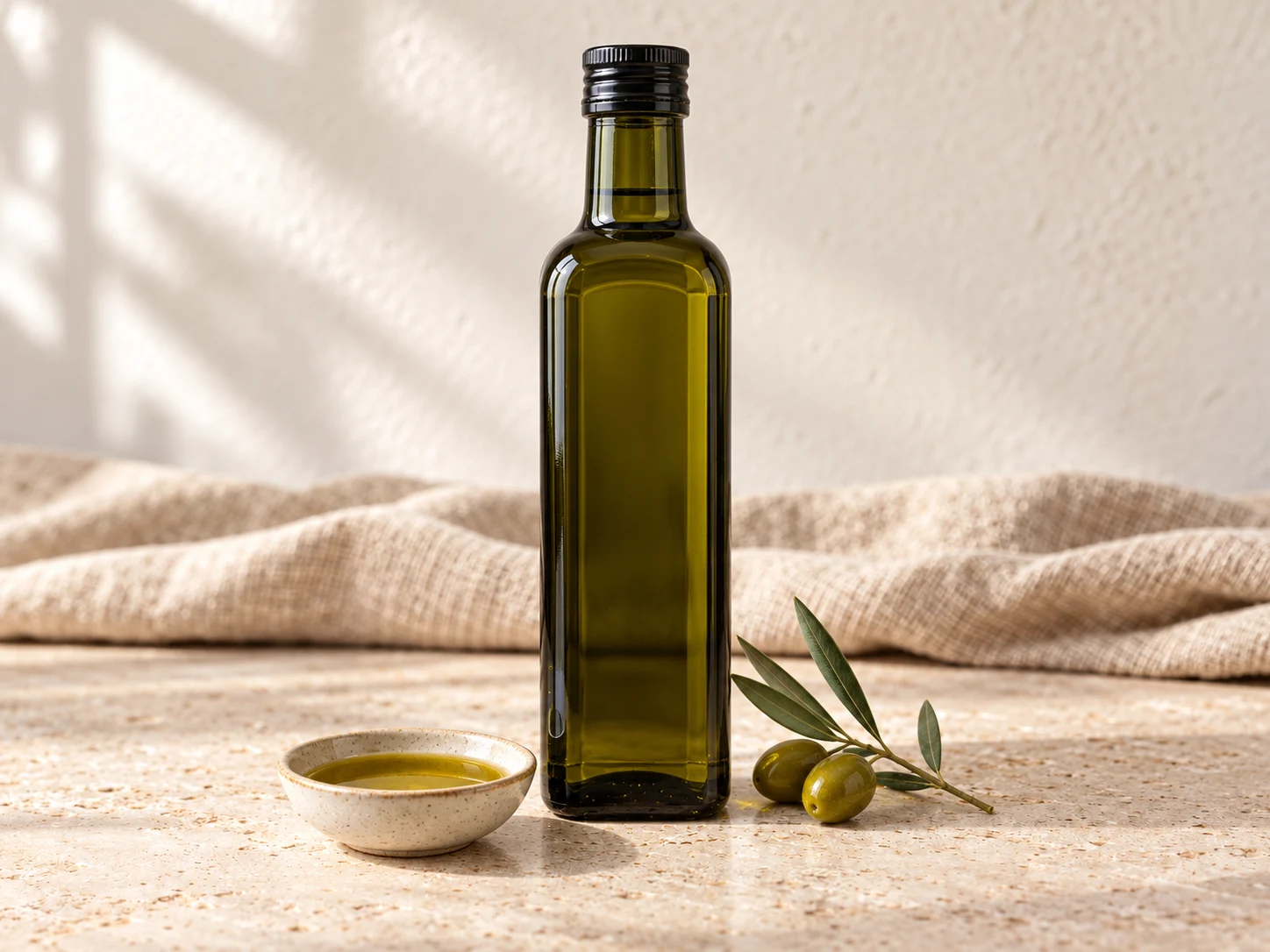
Bei der Verkostung von authentischem Kalinjot-Ernteöl aus einem Löffel wird sich eine deutliche Kitzel- und Pfefferbrand im Hals verfangen. Dieses Halsempfinden ist keine Säure - es ist der biologische Marker von oleocanthal aktivierenden TRPA1-Rezeptoren, die im Hals, aber nicht auf der Zunge exprimiert werden (Peyrot des Gachons et al., Journal of Neuroscience 2011;31(3):999-1009, doi:10.1523/JNEUROSCI.1374-10.2011). Beauchamp et al. (Nature 2005;437:45-46, doi:10.1038/437045a) zeigte, dass Oleocanthal auch die gleichen Cyclooxygenase-Enzyme hemmt wie Ibuprofen im Labor - der Halsstich ist ein sensorischer Hinweis auf diese Chemie, keine Dosis von Medizin).
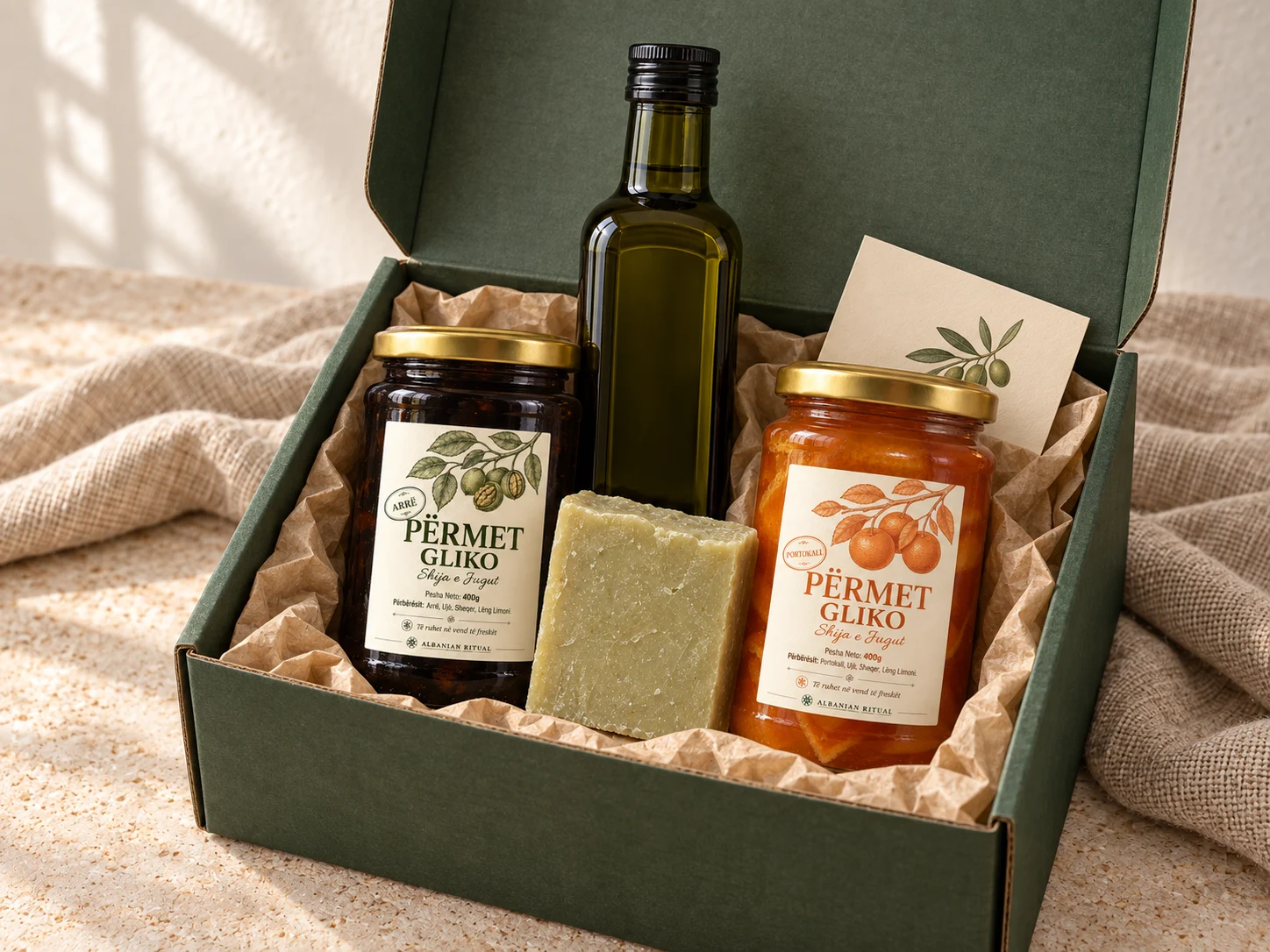
Probieren Sie unsere Einhainernte in der albanischen Ritual-Olivenöl-Sammlung.