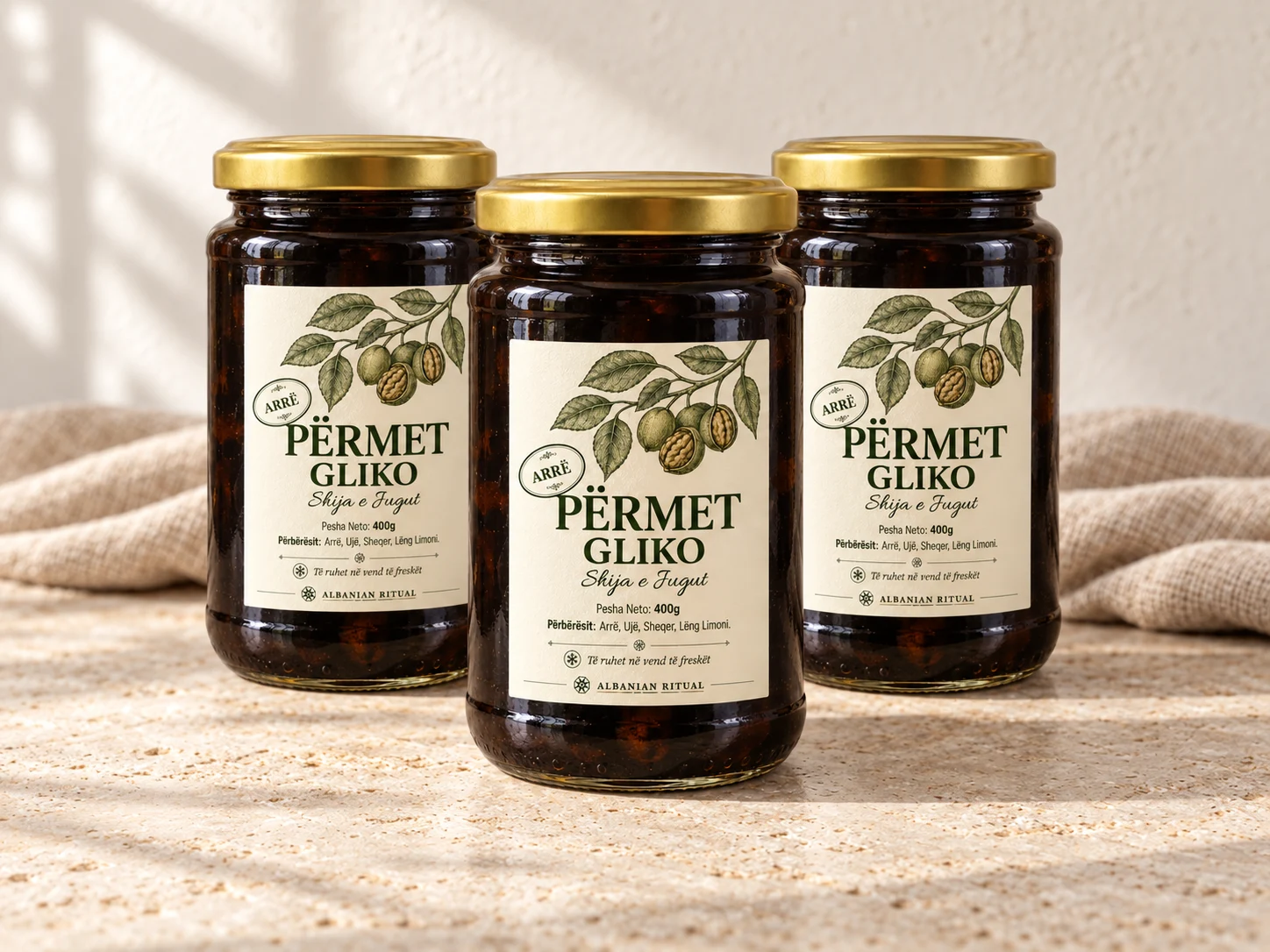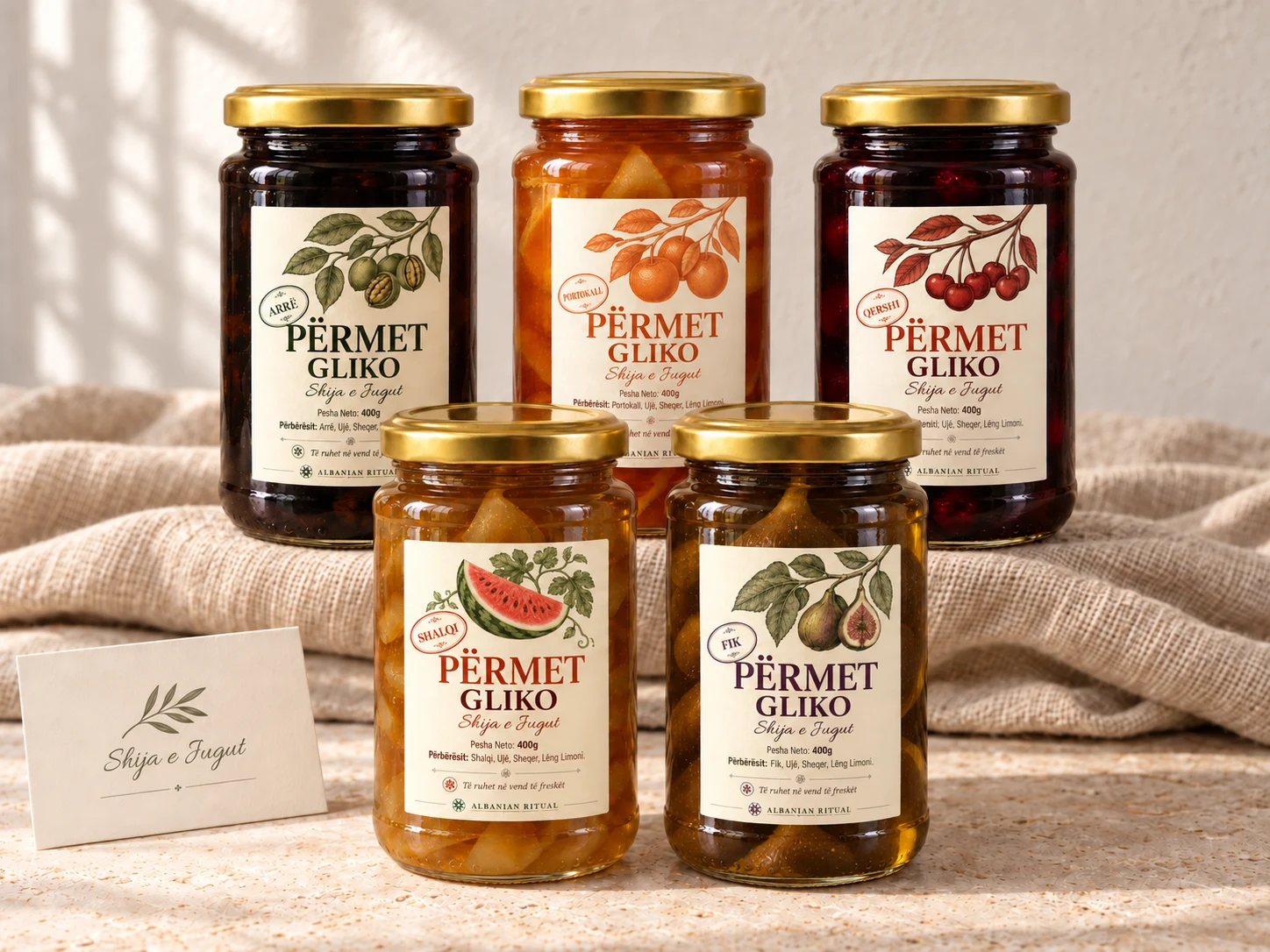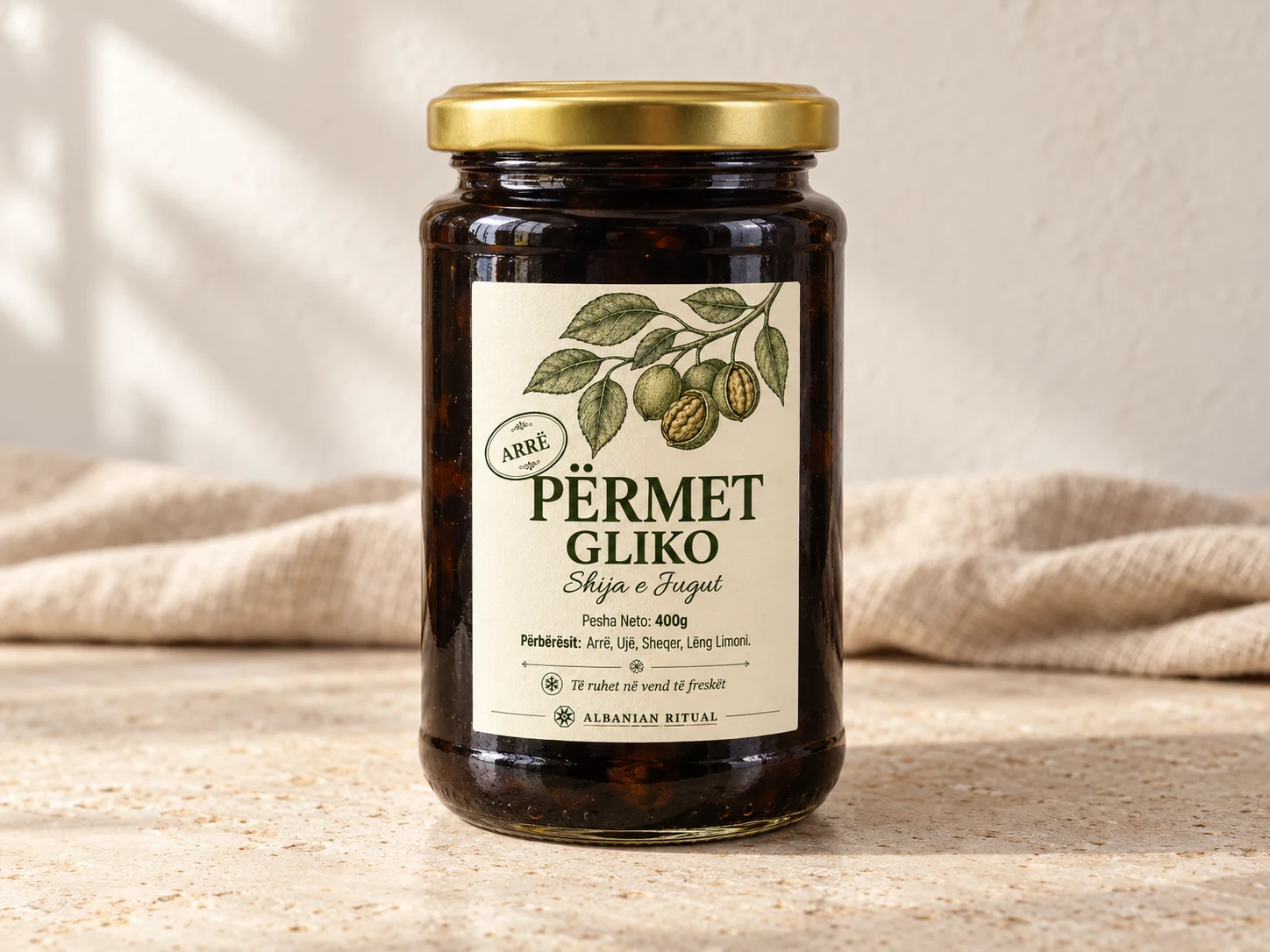
Kurz gesagt. Grüne Walnussgliko (gliko arre) erfordert unlignifizierte grüne Walnüsse, die Anfang Juni geerntet werden, wenn die zentrale Schale völlig weich bleibt. Die intensive Bitterkeit von Juglone und löslichen polyphenolischen Gerbstoffen wird durch ein kontinuierliches 14-tägiges Kaltwasserbad mit mehreren täglichen Wasserwechseln beseitigt. Die Frucht wird dann kurz in Nahrungsmittel-Calciumhydroxid (Kalkwasser) gefestigt, um Zellwand-Pektinen zu vernetzen, bevor sie langsam in Zuckersirup in Kupfergefäßen gekocht wird.
Das zehntägige Erntefenster vor der Verholzung
Grüner Walnussgliko kann nur während eines engen 10-tägigen Saisonfensters in Südalbanien hergestellt werden, typischerweise zwischen dem 28. Mai und dem 10. Juni. Während dieser Phase hat die Frucht von Juglans regia ihre volle unreife Größe erreicht, aber der innere holzige Endokarp (die Schale) hat noch nicht mit der Verholzung begonnen.
Handwerker testen jede Walnuss mit einer dünnen Nadel oder einem Holzspieß: Wenn der Stift mühelos vom Stiel bis zur Spitze durch den Kern läuft, ohne den Kornwiderstand zu erreichen, ist die Walnuss perfekt für Gliko.
Juglon und lösliche Tannine entfernen
Rohe unreife Walnüsse sind aufgrund hoher Konzentrationen an Juglone (5-Hydroxy-1,4-naphthalindion) und hydrolysierbaren Gerbstoffen bitter und adstringierend. Um diese Verbindungen zu entfernen, ohne die Walnussstruktur zu zerstören, wird die dünne äußere Schale entfernt und die Walnüsse werden in ein großes Becken mit kaltem Quellwasser getaucht.
Für 12 bis 14 Tage wird das Wasser 3 bis 4 mal alle 24 Stunden gewechselt. Das kalte Wasser sickert die dunklen, adstringierenden Polyphenole durch osmotische Diffusion aus und macht den Walnusskern blass und sauber.
Calciumvernetzung und Köcheln im Kupfertopf
Vor dem Kochen ruhen die ausgelaugten Walnüsse mehrere Stunden in einem geklärten Calciumhydroxidbad (traditionelles Kalkwasser). Calciumionen (Ca2+) binden sich mit Pektinketten in den Walnusszellwänden und bilden ein elastisches Kalziumpektatnetzwerk, das die Walnuss durch stundenlanges Kochen knusprig und ganz hält.
Schließlich werden die Walnüsse in schweren Kupferkessel mit einfachem Zuckersirup, wildem Berghonig und einem Hauch von Nelken oder Zitronenzeste gekocht. Die hohe Wärmeleitfähigkeit von Kupfer sorgt für eine gleichmäßige Wärmeverteilung, verhindert das Versengen und liefert ein lichtdurchlässiges, dunkelgrünes Meisterwerk.
- Timing: Anfang Juni Ernte vor der inneren Schale Verkalkung.
- Laugung: 14 Tage kaltes Quellwasser wechselt, um adstringierendes Juglone auszuwaschen.
- Festigung: Die Vernetzung von Kalziumpektat bewahrt die strukturelle Knirschen.
- Langsames Simmern: Kupfergefäßkochen liefert tiefe Bernsteinklarheit ohne künstliche Zusätze.