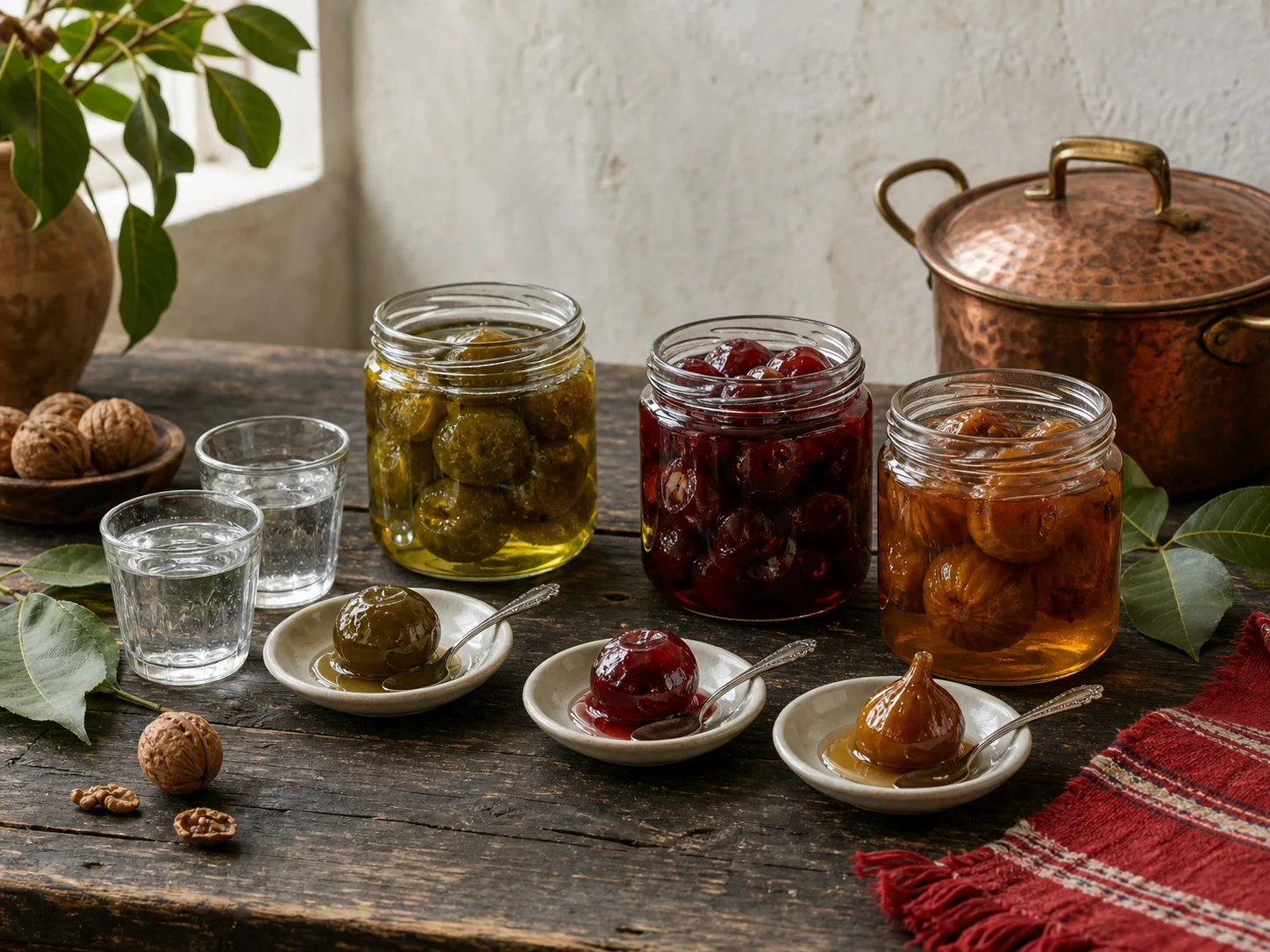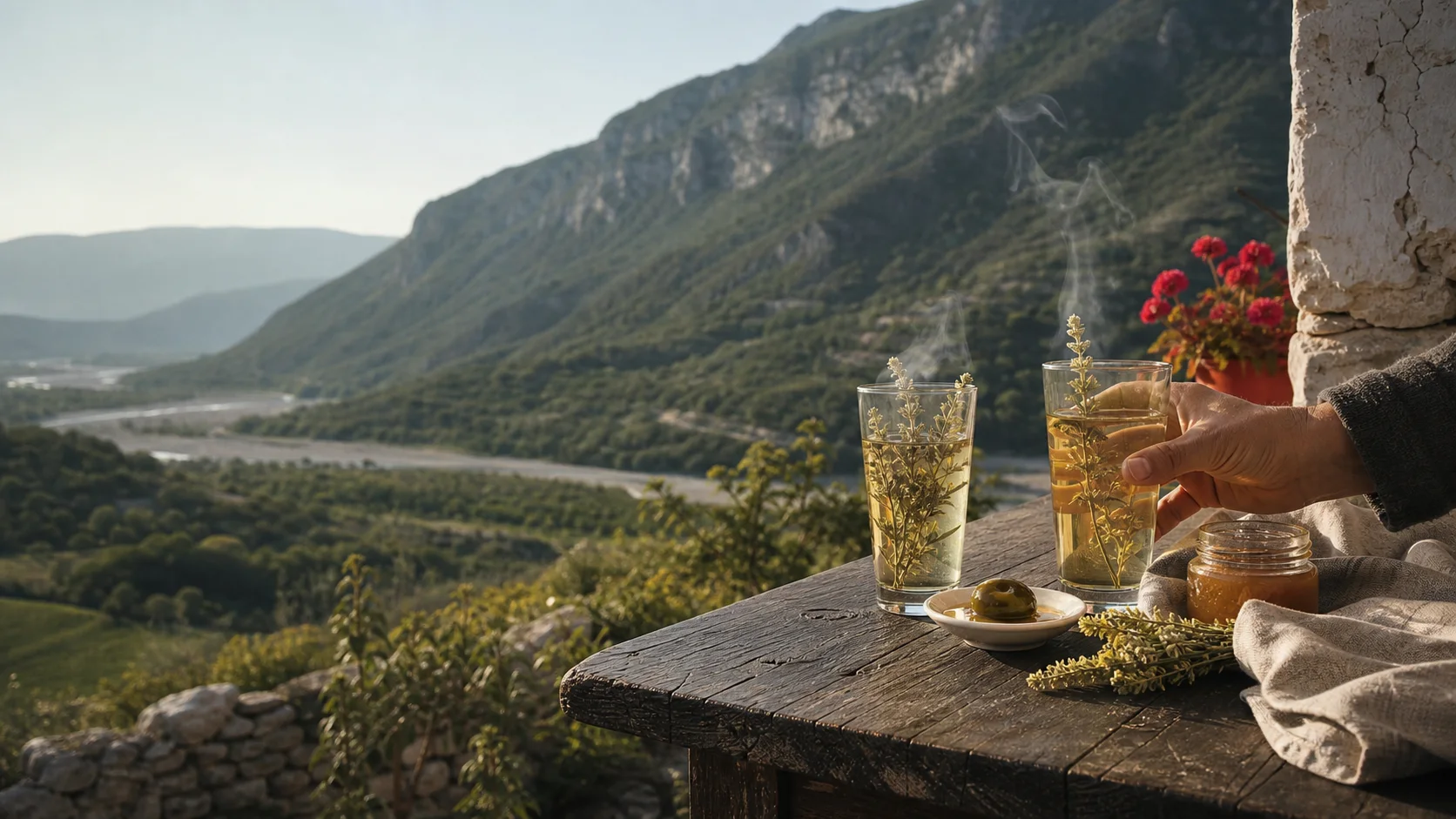
Short answer. In Albanian customary tradition, codified historically across the mountain highlands, the home belongs first to God and the guest (*Shtëpia e shqiptarit është e Zotit dhe e mikur*). The guest (*mysafiri*) is received not as a casual customer, but as an honored arrival whose presence blesses the household. The ritual encounter is structured around an immediate three-part physical offering: a small glass dish with one whole piece of preserved fruit gliko, a glass of chilled mountain spring water, and a freshly simmered cup of mountain tea.
The Customary Sanctuary of the Guest
In historical Vjosa valley life, mountain travelers crossing rugged mountain defiles like Klisura or the Nemërçka passes were offered immediate unconditional shelter. Refusing hospitality was considered a severe violation of community honor (*besa*).
Upon crossing the threshold, the guest was seated by the central hearth (*vatra*) in the highest position of dignity.
The Three-Part Welcome Sequence
Before any business or travel conversation takes place, the host presents the welcoming tray (*tabakaja e mikpritjes*):
First, a single whole piece of sweet gliko (walnut, wild fig, or citrus) on a silver or glass saucer, offering instant glucose replenishment after a strenuous mountain journey.
Second, a tall glass of cold, pure spring water to quench thirst and cleanse the palate.
Third, a piping-hot, pale-gold decoction of whole *Sideritis* mountain tea, lightly sweetened with wild comb honey.
Contemporary Preservation of Slow Hospitality
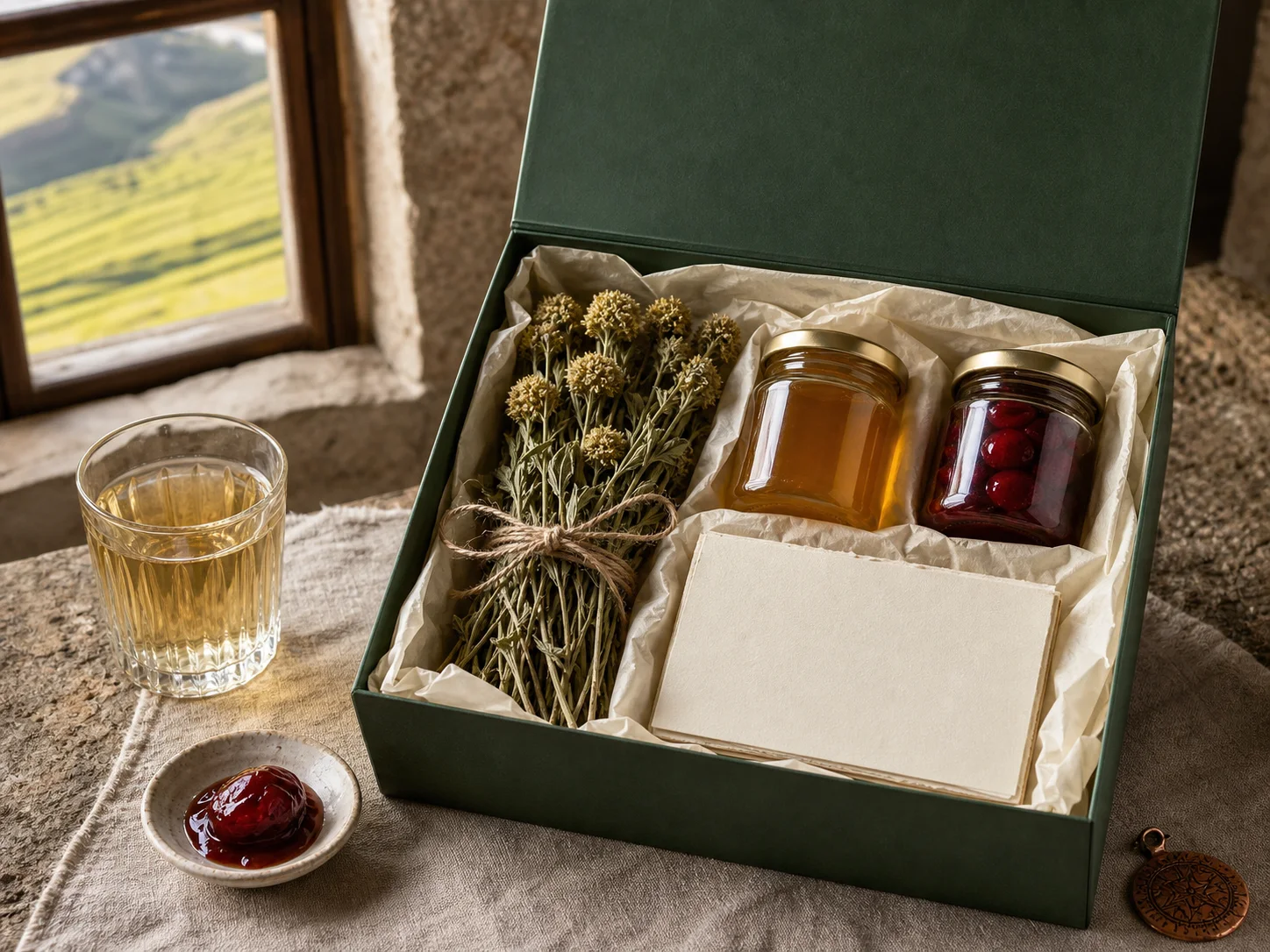
In an era of rushed transactional consumption, Albanian Ritual honors this unhurried ancestral protocol. Every curation is packaged to allow travelers anywhere to recreate this genuine hearth ritual. Explore The First Ritual Box.
- Cultural Canon: *Shtëpia e shqiptarit është e Zotit dhe e mikut* (The house belongs to God and the guest).
- Three-Part Offering: Single piece of gliko, cold spring water, and simmered mountain tea.
- Unhurried Pacing: Conversation begins only after refreshment is accepted and savored.
- Living Tradition: Preserved continuously across the stone households of Përmet and Këlcyrë.